Earliest prayer to mary: essential, complete guide and 5 key facts
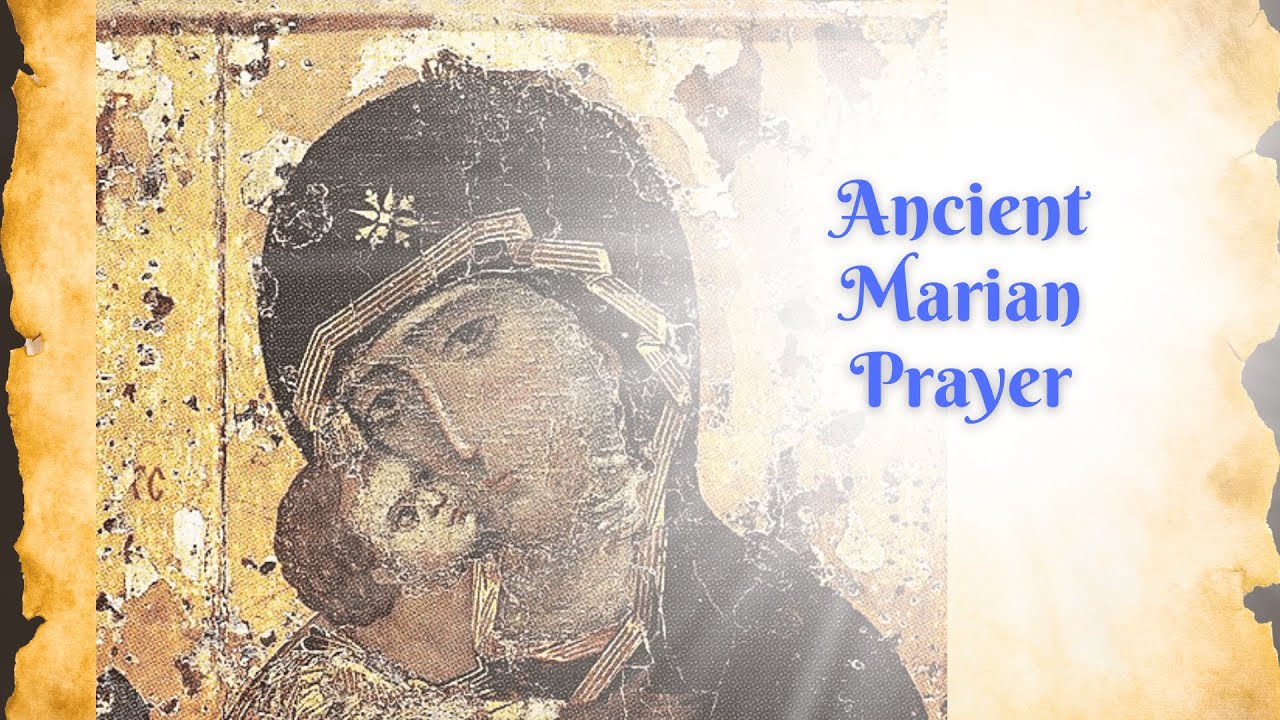
earliest prayer to mary: history, text, and meaning
The phrase earliest prayer to mary refers to a short and beautiful text known as “Sub tuum praesidium” (Latin for “Under your protection”). Preserved on a papyrus from the third century, it offers a window into the earliest Christian devotion to Mary and shows how first generations of believers sought her motherly intercession. This earliest prayer to mary is important for understanding both the history of Christian prayer and the development of Marian theology across East and West.
In this guide, we explore what the earliest prayer to mary is, why it matters, how scholars date it, what it says about the title “Mother of God” (Theotokos), and how ordinary people can use it today. We will also clarify common misunderstandings, compare textual versions, and provide reliable resources so you can read and appreciate the prayer in context.
What is the earliest prayer to mary?
When Christians talk about the earliest prayer to mary, they are referring to a short petition called “Sub tuum praesidium.” The title comes from its opening words in Latin: “Under your protection.” The heart of the prayer is simple: Christians ask Mary—the Mother of Jesus—to protect them from danger and to intercede with God on their behalf. This is the earliest preserved example of a direct prayer to Mary outside the New Testament texts themselves.
One common English form of the prayer runs as follows: “We fly to your protection, O Holy Mother of God; do not despise our petitions in our necessities, but deliver us from all dangers, O ever glorious and blessed Virgin.” In the Roman Catholic tradition it is often recited in Advent or in times of trial; in the Eastern Churches it appears in various liturgies and daily prayers. Because it is the earliest prayer to mary known in a stable text, it is a cornerstone of both Catholic and Orthodox devotion.


It is important to remember that early Christians venerated Mary not as a goddess but as the Mother of God Incarnate. In other words, the earliest prayer to mary is a request for her intercession—asking a holy person to pray for us—rather than an act of worship, which Christians offer to God alone.
Historical background and discovery
The John Rylands Papyrus and dating
The earliest known manuscript of “Sub tuum praesidium” is a small papyrus fragment, often called the John Rylands Papyrus (Papyrus Rylands 470). Scholars generally date it to the third century, probably around AD 250–280. This places the earliest prayer to mary within a generation or two of the time when the Church was still defining its public identity and liturgical life in the face of intermittent persecutions.
The existence of this papyrus matters for two reasons. First, it shows that devotion to Mary (as intercessor and protector) is not a late medieval invention but an ancient Christian practice. Secondly, it uses the title “Mother of God” (Greek: Theotokos), which some people assume only became common after the Council of Ephesus in 431. In fact, the earliest prayer to mary demonstrates that believers were already comfortable invoking Mary under this title well before the council formally affirmed it.
From Egypt to the wider Mediterranean
The papyrus likely comes from Egypt, reflecting the rich devotional life of early Egyptian Christianity. From there, the text of the earliest prayer to mary spread widely across the Mediterranean world, taking root in both Greek and Latin traditions. Over time, minor variations arose in wording, but the core message—seeking Mary’s protection—remained constant.
If you would like a concise scholarly overview, the Wikipedia article provides historical background and references to key academic discussions; see the historical overview of Sub tuum praesidium. The papyrus itself is held by the University of Manchester; you can learn more about its collections through the John Rylands Library.
Theology in the earliest prayer to mary
The title Theotokos (Mother of God)
One striking feature of the earliest prayer to mary is its use of the title “Mother of God.” In English this often sounds bold, but it expresses a core Christian conviction: the one born of Mary is truly God the Son made human. The title safeguards the truth about Christ rather than placing Mary above God. For a clear primer on the term, see Britannica’s article on Theotokos.
Intercession and protection
Another notable theological point is intercession. Christians ask Mary to pray for them, particularly in times of danger. In the earliest prayer to mary, this request is both personal (“do not despise our petitions”) and communal (protection “from all dangers”). The tone is filial and trusting, as one would speak to a mother in need. It resonates with the broader Christian understanding of the “communion of saints,” where members of Christ’s body pray for one another across time and space.
Veneration, not worship
It bears repeating that Christians distinguish between worship (latria), given to God alone, and veneration (dulia), given to saints. Mary, as the foremost among the saints, is shown special honour (hyperdulia), but not worship. The earliest prayer to mary expresses this by asking Mary to intercede; it never treats her as an independent source of salvation. For the Catholic theological framing of Marian doctrine and devotion, see Lumen Gentium, chapter VIII on the Blessed Virgin Mary.
Textual variations you may encounter
Because the earliest prayer to mary is so ancient and widespread, you may encounter slightly different versions. The sense remains the same, but wording can vary according to language, liturgical tradition, or translation philosophy.
Common Catholic form (English)
- “We fly to your protection, O Holy Mother of God; do not despise our petitions in our necessities, but deliver us always from all dangers, O glorious and blessed Virgin.”
Some translations use “ever” instead of “always” and “from every danger” rather than “from all dangers”. Minor shifts like these reflect different source manuscripts and translators’ preferences.
Orthodox usages
In Greek and Slavonic traditions, the prayer is integral to evening services and personal devotions. It often follows a hymn or appears during Compline. Because the earliest prayer to mary is rooted in the East, Orthodox Christians have preserved deeply traditional melodies and formulas. If you are interested in the broader liturgical framework, an overview of the Eastern Orthodox Church gives helpful context on how and why such prayers are used in daily worship.
Coptic and other versions
In Coptic Christianity, a related form exists that mirrors the same trust and titles, showing how the earliest prayer to mary took root across distinct cultures. You might see “do not turn away from us” or “do not neglect our supplications” as alternatives to “do not despise our petitions,” but the heart of the prayer never changes: seeking protection under Mary’s mantle.
How the earliest prayer to mary developed alongside other Marian prayers
While the earliest prayer to mary dates to the third century, other Marian texts rose to prominence in later periods. The “Hail Mary,” for example, formed gradually from the biblical greetings of Luke’s Gospel and was widely used in the West by the High Middle Ages. Antiphons like “Salve Regina” also became beloved. This means Christian devotion to Mary did not arrive fully formed; it grew organically over many centuries.
When we set the earliest prayer to mary alongside medieval hymns, we can see both continuity and development. The core request for intercession and protection remains constant, but later texts often add richer poetry and theological reflection. To place this growth within a broad historical frame, see this short historical context of the 13th century, a period that saw flourishing Marian devotion in the West.
How to pray the earliest prayer to mary today
Although rooted in antiquity, the earliest prayer to mary speaks powerfully to modern life. Its language is accessible, and its request—protection in times of danger—feels immediately relevant. Here are simple ways to integrate it into your prayer routine:
Personal prayer
- Begin or end your day by reciting the prayer slowly. Breathe calmly and focus on its key images: protection, intercession, deliverance.
- Keep a printed or handwritten copy in your wallet, journal, or phone. In moments of stress, use the earliest prayer to mary as a brief, grounding petition.
- If you use a rosary, you can add “Sub tuum praesidium” at the end, especially when praying for safety or a specific intention.
Family or small group prayer
- For family prayer times, invite each person to name a worry or danger, then pray the earliest prayer to mary together for those intentions.
- In a small group, you can alternate lines or add a short silence before and after the prayer to highlight its simplicity.
During liturgical seasons
- Advent and Lent are especially suitable times for the earliest prayer to mary, as Christians often seek guidance and protection during these seasons.
- Use it on feast days of Mary or after reading Gospel passages about the Incarnation to connect the prayer with Scripture.
Why the earliest prayer to mary matters for understanding early Christianity
The earliest prayer to mary illuminates how the first Christians understood Jesus and his Mother. Its early use of Theotokos reveals a robust Christology: if Jesus is truly God made man, then Mary is truly Mother of God in the sense that she gave birth to the divine Son in his incarnate humanity. This was not mere poetry but a concise confession of faith.
Historically, the prayer also counters a popular misconception: that Marian devotion sprang up only in the Middle Ages. The earliest prayer to mary demonstrates a living, affectionate, and doctrinally grounded tradition from the Church’s early centuries—one that valued Mary’s intercession without confusing it with the worship due to God alone.
Key points at a glance
- The earliest prayer to mary is “Sub tuum praesidium,” preserved on a third-century papyrus.
- It asks for Mary’s protection and intercession, not worship.
- The prayer uses the ancient title “Mother of God” (Theotokos), reflecting a clear belief in Christ’s divinity.
- It exists in multiple languages and traditions, with minor textual variations.
- Christians today can use it personally, in families, and within liturgy—especially in times of danger or uncertainty.
Common mistakes to avoid
- Assuming Marian devotion began only in the medieval period. The earliest prayer to mary shows otherwise.
- Confusing veneration with worship. The prayer is a request for intercession—worship remains for God alone.
- Overlooking Eastern roots. The earliest prayer to mary was cherished in Greek, Coptic, and other Eastern traditions long before it became widely known in the Latin West.
- Thinking there is only one “official” English text. Multiple faithful translations exist; the meaning is consistent.
Recommended external resources
- Detailed historical overview of Sub tuum praesidium with references and manuscript notes.
- John Rylands Library, custodian of the papyrus containing the earliest form of the prayer.
- Britannica: Theotokos for background on the title “Mother of God”.
- Vatican: Lumen Gentium, chapter VIII for official Catholic teaching on Mary’s role and veneration.
Related articles
Frequently asked questions about earliest prayer to mary
Is “Sub tuum praesidium” really the earliest prayer to Mary?
It is the earliest extant prayer to Mary that scholars can date with confidence, thanks to a third-century papyrus. Earlier oral forms or lost texts may have existed, but “Sub tuum praesidium” is the oldest surviving written example widely accepted by historians.
What does “Mother of God” mean in this context?
It affirms that the child born of Mary is truly God the Son in human flesh. The title protects the truth about Jesus rather than elevating Mary above God. By using Theotokos so early, the earliest prayer to mary shows that believers saw Mary’s motherhood in direct relation to Christ’s divinity.
Is praying the earliest prayer to mary the same as worshipping Mary?
No. Christians distinguish veneration from worship. The earliest prayer to mary asks for Mary’s intercession—much as you might ask a friend to pray for you—while worship remains due to God alone.
How can I incorporate the prayer into daily life?
You can recite it upon waking or before bed, at moments of anxiety, or when travelling. Many people add it to the end of the rosary or include it in family prayers, especially when seeking protection.
Are there different versions of the prayer’s wording?
Yes. Small variations exist across languages and traditions, such as “do not despise our petitions” versus “do not reject our supplications,” or “from all dangers” versus “from every peril.” The meaning is consistent: asking Mary to protect and intercede.
Conclusion on earliest prayer to mary
The earliest prayer to mary, known as “Sub tuum praesidium,” is more than a historical curiosity. It reveals the earliest Christians’ confidence in Mary’s intercession, their devotion to her as Mother of God, and their deep trust in divine protection. In a few carefully chosen lines, it expresses a faith that is at once Christ-centred and tenderly Marian.
As a third-century witness, the earliest prayer to mary corrects modern misunderstandings about when Marian devotion began. As a living prayer, it offers comfort and focus in times of trouble. Whether you pray it alone at dawn, with your family in the evening, or during a liturgy, its simplicity and depth make it a timeless companion for the Christian journey.
If you are exploring Christian tradition, consider making the earliest prayer to mary a regular part of your practice. Under Mary’s protection—and with her unfailing intercession—believers have found courage for many centuries, and so can we today.
