Glory be catholic prayer: essential, complete guide with 5 keys
glory be catholic prayer
The glory be catholic prayer is a simple, beautiful doxology that praises the Holy Trinity and closes many moments of prayer with dignity and joy. Short enough to memorise and rich enough to pray for a lifetime, it is used at home, in churches, and during devotions such as the Rosary. In this guide, we will explore what the glory be catholic prayer says, why it matters, where it comes from, how to pray it well, and how to teach it to others.
Whether you are returning to prayer, beginning a spiritual routine, or seeking a quick way to re-centre your day, the glory be catholic prayer offers a flexible and meaningful way to honour God—Father, Son, and Holy Spirit.
What is the glory be catholic prayer?
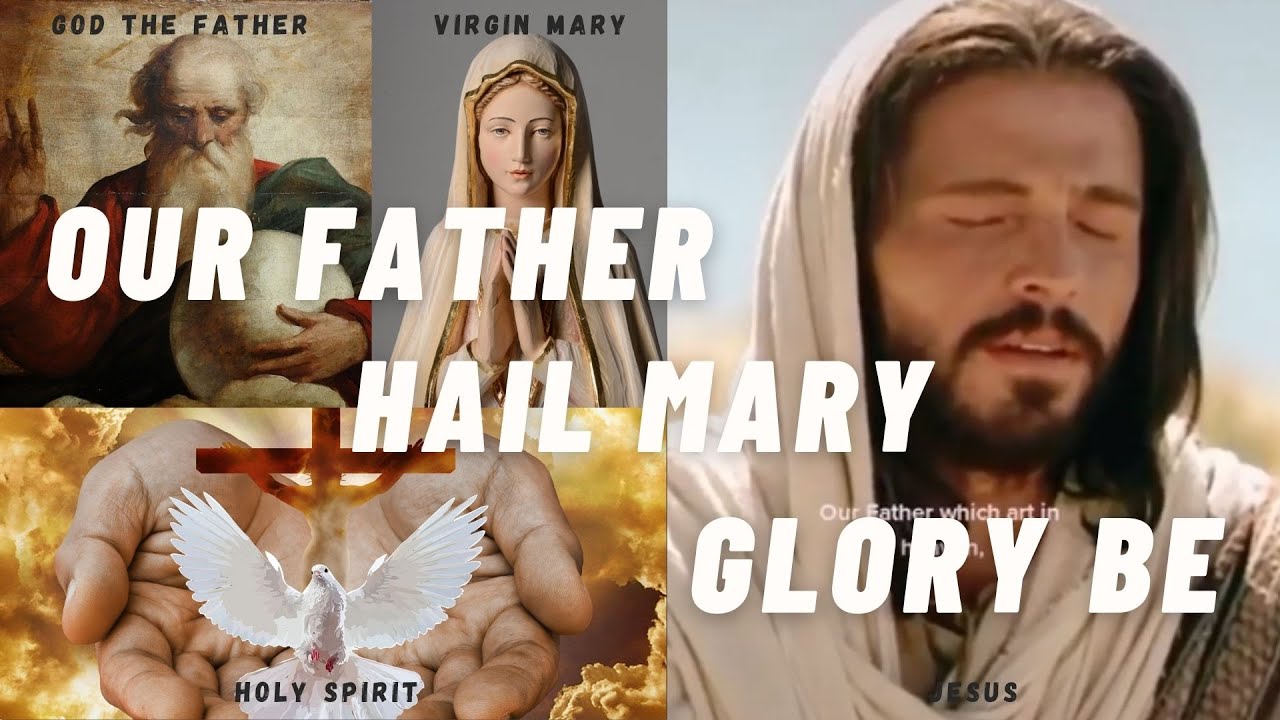
The glory be catholic prayer—often called the Gloria Patri or “Glory Be”—is a brief formula of praise to the Trinity. In English it is most commonly prayed as:
“Glory be to the Father, and to the Son, and to the Holy Spirit; as it was in the beginning, is now, and ever shall be, world without end. Amen.”

Because it names the Father, the Son, and the Holy Spirit, the prayer is called “Trinitarian”. It is used to conclude psalms and hymns, punctuate sets of prayers (like decades in the Rosary), and seal personal petitions with a final act of worship. In many places, the glory be catholic prayer is accompanied by the Sign of the Cross or a slight bow of the head in reverence for the Holy Trinity.
Origins and meaning of the glory be catholic prayer
The roots of the glory be catholic prayer reach back to the early centuries of Christianity. The Latin title Gloria Patri (“Glory [be] to the Father”) signals its purpose: to give glory to God in a concise, communal way. Early Christians often added short doxologies to psalms and hymns; over time, the formula we know today became standard in the West, while similar forms developed in Eastern liturgies.
Its meaning unfolds line by line:
- “Glory be to the Father, and to the Son, and to the Holy Spirit” affirms that the one God is three divine Persons, co-equal and co-eternal.
- “As it was in the beginning” recalls God’s eternal nature—before creation, God is.
- “Is now, and ever shall be” proclaims that God’s glory is unchanging and everlasting.
- “World without end” (a traditional English rendering of “for ever and ever”) affirms the never-ending praise due to God.
In short, the glory be catholic prayer compresses a whole creed’s worth of faith into a few lines of praise, keeping worship at the centre of Christian prayer.
When and where Catholics use the glory be catholic prayer
Because it is brief, memorable, and universal, the glory be catholic prayer appears in many settings:
- In the Rosary, it concludes each decade (after the ten Hail Marys).
- In the Liturgy of the Hours (the Church’s daily prayer), it ends every psalm and canticle.
- In personal prayer, it can close petitions or moments of silent meditation.
- In group devotions, it helps participants end shared prayer in unity.
- In teaching, it serves as a foundational text for learning about the Holy Trinity.
Outside the Catholic Church, many Christian traditions also use a form of this doxology. For example, there are parallels within the Divine Office of the East. If you are curious about how Eastern Christians pray and worship, this overview of the Eastern Orthodox Church offers helpful context about similarities and differences in liturgical life.
Given the large global Christian family, the widespread use of short, shared prayers like the glory be catholic prayer is unsurprising. For a sense of scale, you might be interested in a concise overview of how many Christians live in the world today, which helps explain the diversity of languages and customs in which this prayer appears.
How to pray the glory be catholic prayer
You can pray the glory be catholic prayer on its own or as part of a devotion. A simple approach is:
- Pause for a moment. Breathe slowly to become present to God.
- Recall that you are addressing the Holy Trinity.
- Pray the words clearly: “Glory be to the Father, and to the Son, and to the Holy Spirit…”
- Conclude with a deliberate “Amen,” meaning “so be it.”
Some people make the Sign of the Cross before or after praying, while others bow their head during “Father, Son, and Holy Spirit”. Choose the gesture that best supports your attention and reverence.
Praying the glory be catholic prayer within the Rosary
In the Rosary, the glory be catholic prayer is said after each set of ten Hail Marys (a decade), usually followed by the “O my Jesus” prayer. If you are learning the Rosary, step-by-step guides such as the Rosary Center’s instructions on how to pray the Rosary provide a clear structure and explain where the “Glory Be” fits.
Incorporating the glory be catholic prayer into daily life
Because it is so short, the glory be catholic prayer is ideal for brief pauses throughout the day. You might:
- Begin or end work sessions with it to re-focus your mind.
- Pray it after reading a psalm or spiritual reflection.
- Use it to close a time of thanksgiving after meals.
- Say it when you need to re-centre during stressful moments.
Over time, this steady return to praise can shape the rhythm of your day, bringing faith gently into ordinary moments.
Variations, translations, and musical settings of the glory be catholic prayer
In Latin the prayer is: “Gloria Patri, et Filio, et Spiritui Sancto; sicut erat in principio, et nunc, et semper, et in saecula saeculorum. Amen.” The phrase “in saecula saeculorum” is literally “unto the ages of ages,” which English traditionally renders as “world without end” or “for ever and ever”.
You may encounter small differences among translations, for example:
- “and to the Holy Spirit” versus “and to the Holy Ghost” (older English usage).
- “world without end” versus “forever and ever” (stylistic choice).
Musically, the glory be catholic prayer is often chanted in plainchant or set to simple tones that make it easy for a congregation to sing together. In the Liturgy of the Hours, different tones may be used depending on the season or the psalmody.
Common mistakes with the glory be catholic prayer—and how to avoid them
Because the glory be catholic prayer is familiar, it is easy to say it quickly or without attention. Here are frequent pitfalls and simple remedies:
- Rushing the words: Slow down and breathe between the two lines. Let the content shape your pace.
- Mixing phrases: Keep the structure in mind—praise (line one), then time (“as it was… is now… ever shall be”), then the “world without end” close.
- Forgetting the meaning of “world without end”: Remember it means “forever”—an affirmation of God’s eternal glory, not a literal statement about this present world.
- Praying on autopilot: Focus briefly on each Person of the Trinity as you speak the names.
- Unclear enunciation when leading a group: Project the first words (“Glory be…”) and keep a steady, gentle pace so others can follow.
Theological depth in a short form
One reason the glory be catholic prayer endures is its compact theological richness. In a sentence or two, it
- Names the Holy Trinity explicitly and equally.
- Affirms God’s eternity across past (“in the beginning”), present (“is now”), and future (“ever shall be”).
- Grounds Christian worship in praise rather than only petition.
The Catechism of the Catholic Church highlights the Trinity as the central mystery of faith and life. For a fuller treatment, see the Catechism’s teaching on the Trinity and Christian prayer, which explains how the Church’s worship is always Trinitarian at heart.
By returning to the glory be catholic prayer often, we let this doctrine move from the page to the heart—shaping how we understand God and ourselves.
How to teach and lead the glory be catholic prayer
Teaching the glory be catholic prayer can be straightforward and joyful. Consider these practical tips:
- Learn by segments: Have learners repeat the prayer phrase by phrase, then join the full text.
- Explain vocabulary: Clarify “doxology” (a brief prayer of praise) and “world without end”.
- Use gestures: A simple bow at “Father, Son, and Holy Spirit” can emphasise reverence.
- Link to Scripture: Reference Matthew 28:19 (“in the name of the Father and of the Son and of the Holy Spirit”) to show resonance with Jesus’ words.
- Integrate it into routines: Open and close class sessions or family prayers with the “Glory Be”.
- Invite reflection: Ask, “Which word stood out today—Father, Son, or Holy Spirit—and why?”
When leading a group, announce clearly, “Let us conclude with the glory be catholic prayer,” pause, and then begin. In mixed groups where people come from different traditions, mention that there may be minor wording differences and that all are welcome to use the version they know.
Using the glory be catholic prayer alongside other prayers
The glory be catholic prayer pairs well with many forms of devotion. For example:
- After a psalm: It mirrors the Church’s practice of adding a doxology to conclude psalmody.
- With petitions: Close personal intercessions with praise, keeping prayer balanced.
- In thanksgiving: After a blessing, a short praise anchors gratitude in God’s eternity.
If you wish to see the prayer in context with other standard Catholic texts, the USCCB’s collection of common Catholic prayers sets it alongside the Our Father, Hail Mary, and other essentials. For historical background and variants, the Wikipedia article on the “Glory Be” (Gloria Patri) is a helpful overview.
Short meditation with the glory be catholic prayer
Because the prayer is compact, it lends itself to brief meditations. Try this simple pattern:
- On “Glory be to the Father”: Picture the Father’s loving gaze upon creation—and upon you.
- On “and to the Son”: Recall Jesus’ life, death, and resurrection as the heart of salvation.
- On “and to the Holy Spirit”: Invite the Spirit to renew your mind and heart.
- On “as it was in the beginning…”: Rest for a moment in God’s timelessness.
- On “world without end. Amen.”: Surrender your concerns to God’s everlasting care.
Used this way, the glory be catholic prayer becomes more than a conclusion; it becomes a doorway into contemplation.
Recommended external resources
- Common Catholic prayers (including the “Glory Be”) from the USCCB
- Catechism of the Catholic Church (Trinity, prayer, and doxologies)
- How to pray the Rosary (where the “Glory Be” is placed)
- Historical and ecumenical background of the “Glory Be” (Wikipedia)
Related articles
Frequently asked questions about the glory be catholic prayer
Is “world without end” the best translation of the prayer’s final line?
“World without end” is a traditional English translation of the Latin “in saecula saeculorum,” which literally means “unto ages of ages.” Many modern texts use “forever and ever.” Both express the same idea: God’s glory is eternal. If your community uses one form, it is fine to follow that wording.
How is the “Glory Be” different from the “Gloria in excelsis Deo” at Mass?
The glory be catholic prayer (Gloria Patri) is a short doxology used frequently in private and communal prayer. The “Gloria in excelsis Deo” is a longer hymn of praise sung or recited at Mass on Sundays outside Advent and Lent and on solemnities. Both are praises to God, but they serve different liturgical purposes.
Can I pray the glory be catholic prayer on its own, or must it follow other prayers?
You can certainly pray it on its own. While it often concludes a psalm, decade of the Rosary, or a set of intercessions, the glory be catholic prayer stands perfectly well as a brief act of worship at any time of day.
Is there a biblical basis for the glory be catholic prayer?
Although the exact wording is not a direct Scripture quote, the prayer echoes biblical themes, especially the Trinitarian formula of Matthew 28:19 and the doxologies found in St Paul’s letters. The structure—praise and eternal perspective—matches many scriptural prayers.
Do Eastern Christians use a similar doxology?
Yes. In Eastern Christian traditions there are comparable doxologies that praise the Trinity, often with slightly different formulas or placement in the liturgy. The shared instinct is the same: to conclude prayer by giving glory to the Father, Son, and Holy Spirit.
Should I make the Sign of the Cross during the glory be catholic prayer?
Many Catholics bow their heads at the names “Father, Son, and Holy Spirit,” and some make the Sign of the Cross before or after the prayer. There is no single universal rule outside formal liturgy; use the gesture that fosters attentive, reverent prayer.
What is the best way to help children remember the words?
Break the prayer into two lines, teach it call-and-response, and connect each Person of the Trinity with a simple image (for instance, Father—Creator, Son—Saviour, Holy Spirit—Helper). Repetition and routine will do the rest.
Conclusion on glory be catholic prayer
The glory be catholic prayer is one of the Church’s most enduring treasures: short, scripturally resonant, and theologically rich. In a few lines, it names the Trinity and anchors our hearts in God’s unchanging glory across time—past, present, and future. Whether you are closing a psalm, finishing a decade of the Rosary, or pausing during a busy day, it provides an easy yet profound way to pray.
If you are new to prayer, begin by memorising the glory be catholic prayer and saying it at set points each day. If you are experienced, slow the pace and let its meaning sink in—Father, Son, and Holy Spirit, eternally worthy of praise. As this doxology becomes part of
