Glory to the father and to the son: 5 key points, essential guide
What does ‘glory to the father and to the son’ mean?
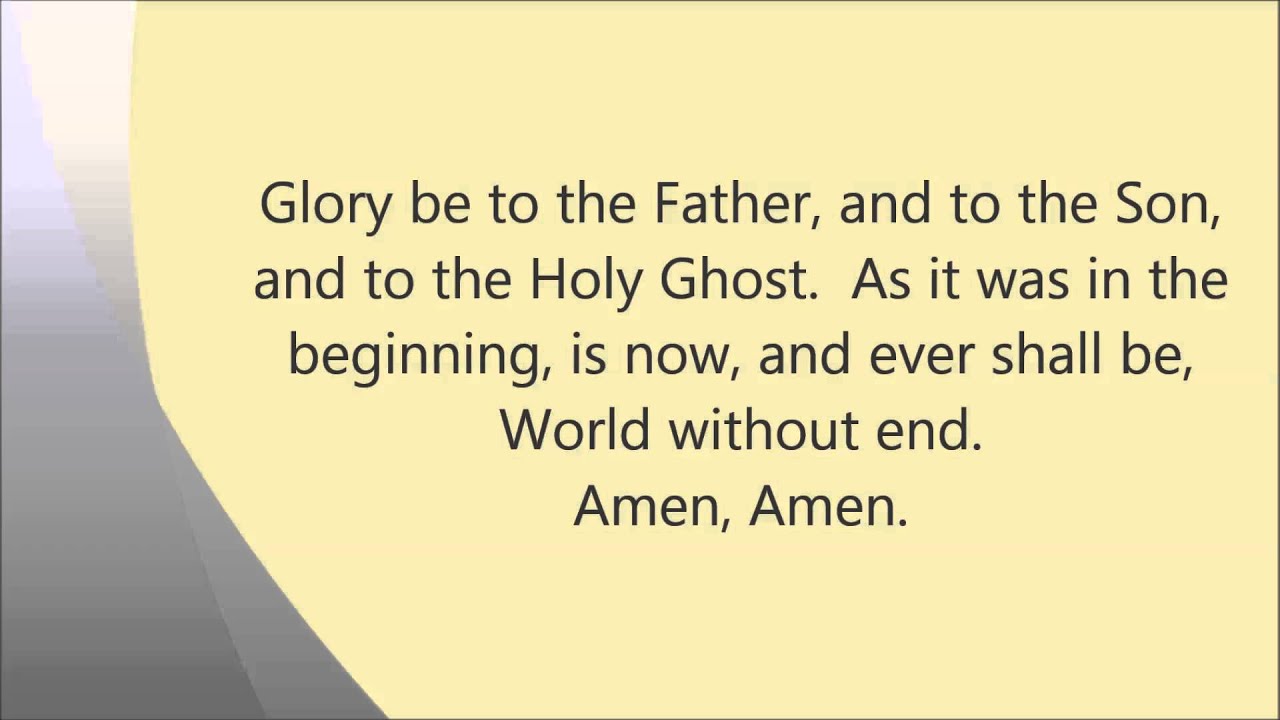
For many Christians across traditions, the short prayer or doxology known as glory to the father and to the son is a graceful way to praise God in everyday life. You may recognise it in its fuller English form: “Glory be to the Father, and to the Son, and to the Holy Spirit; as it was in the beginning, is now, and ever shall be, world without end. Amen.” Whether whispered privately or sung in church, glory to the father and to the son expresses faith in the Holy Trinity and frames moments of worship with reverent praise.
This article explains what glory to the father and to the son is, why it matters, where it comes from, and how to use it meaningfully. We will also look at how different Christian traditions approach the phrase, common variations in wording and music, practical tips for prayer at home, and frequent questions people ask. By the end, you will have a clear, friendly guide to this brief yet profound act of praise.
What is the prayer behind glory to the father and to the son?
In most English-language churches, the short doxology called the “Gloria Patri” goes like this: “Glory be to the Father, and to the Son, and to the Holy Spirit.” Frequently it continues, “as it was in the beginning, is now, and ever shall be, world without end. Amen.” The Latin original—Gloria Patri, et Filio, et Spiritui Sancto—is centuries old. Across time and culture, however, the core is unchanged: glory to the father and to the son and to the Holy Spirit.
Christians use this brief prayer to conclude psalms, to punctuate readings, or simply to centre their thoughts on God. It is a classic example of a doxology—a short formula of praise. In daily prayer cycles (such as Morning and Evening Prayer), the Gloria Patri acts like a refrain that keeps worship Christ-centred and Trinitarian.

The words behind glory to the father and to the son: origins and meaning
The word “glory” in Scripture carries the sense of honour, weight, radiance, and splendour that belong to God. When we say glory to the father and to the son, we are doing more than complimenting: we are acknowledging God’s eternal worth and majesty. The addition “and to the Holy Spirit” makes the prayer explicitly Trinitarian, affirming the unity and co-equality of Father, Son, and Spirit.
The concluding line—“as it was in the beginning, is now, and ever shall be, world without end”—confesses the eternal nature of God. The phrase “world without end” (a translation of the Latin saecula saeculorum) points to everlasting ages rather than the material world. The whole prayer, therefore, locates our praise in God’s eternity: we join our small voices to the great chorus of worship across time.
If you would like more background on the prayer’s history and variants, this overview of the Gloria Patri is helpful: concise history and forms of the Gloria Patri. For the broader category it belongs to, see this introduction to doxologies: what a doxology is and how it is used.
Scriptural threads that shape the doxology
While the exact words of glory to the father and to the son are not a direct quotation from a single verse, the prayer knits together biblical themes:
- Trinitarian faith: Jesus commissions disciples to baptise “in the name of the Father and of the Son and of the Holy Spirit” (Matthew 28:19). The doxology mirrors this rhythm.
- Giving glory to God: The Bible repeatedly calls worshippers to ascribe glory to the Lord (for example, Psalm 29:1–2; Romans 11:36).
- Eternity: Phrases like “for ever and ever” and “from age to age” occur throughout Scripture (e.g., Ephesians 3:21; Jude 25), echoed in “world without end.”
For a theological summary of the Trinity that underpins glory to the father and to the son, you may find the Catholic Church’s catechetical sections on the Trinity a readable reference: Catechism of the Catholic Church: Trinity overview. A general encyclopaedic summary of the Gloria Patri can also be found here: background on the Gloria Patri and its liturgical use.
Where and how is glory to the father and to the son used?
Because it is short and memorable, glory to the father and to the son fits naturally in many settings:
- Daily prayer: Often said at the end of psalms or canticles in Anglican, Catholic, Methodist, and Lutheran liturgies.
- Sunday worship: Sung or spoken after readings, during processions, or as a doxological close to hymn verses.
- Personal devotions: Used to begin or end a quiet time, to re-centre during the day, or to give thanks.
- Moments of transition: Saying the doxology can mark the start or close of meetings and small group gatherings.
In the Anglican tradition, for example, the doxology appears frequently in Common Worship and the Book of Common Prayer as a refrain accompanying psalms. In Roman Catholic rites, the wording is similar, whether said quietly or chanted. In Reformed and Methodist churches, you may hear musical settings that highlight “Glory be to the Father” as a congregational response.
glory to the father and to the son in the Eastern and Western traditions
In the Eastern Christian world (often called “Byzantine” or “Orthodox”), the doxology is woven into almost every service, sometimes with slightly different cadence or melody. If you are curious about the tradition in which it is deeply rooted, see this overview of the church’s history and worship: introduction to the Eastern Orthodox Church. In Western churches, the text is largely the same, though musical settings vary from simple chant to harmonised choir pieces.
Why Christians say glory to the father and to the son
There are simple yet profound reasons people keep returning to glory to the father and to the son:
- It is short and memorable, making it easy to integrate into daily life.
- It is doctrinally rich, proclaiming the Trinity in a single breath.
- It connects us with the global church and with centuries of believers.
- It places our worship in God’s eternity, reminding us that praise is always fitting.
For Christians who appreciate continuity, the doxology offers a sense of shared language. For newcomers, it provides a simple starting point for prayer that is faithful, non-technical, and beautiful.
Variations in wording and music
Minor variations exist in English. Some say “Glory be…” while others say simply “Glory to…”; some include “as it was in the beginning…” while others omit it outside formal liturgy. Musically, you will encounter:
- Plainchant tones used for psalmody in monastic and parish settings.
- Hymn-book settings titled “Doxology” that begin “Glory be to the Father…”.
- Contemporary arrangements that set the same words to modern melodies.
Whatever the style, the core truth remains the same: glory to the father and to the son and to the Holy Spirit.
Praying glory to the father and to the son at home: a simple guide
If you want to make the doxology part of your day, here is a gentle, practical way to begin:
- Choose a moment you can keep: at waking, midday, or before bed.
- Be still for a few seconds to gather your thoughts.
- Say slowly: “Glory be to the Father, and to the Son, and to the Holy Spirit.”
- Add, if you wish: “As it was in the beginning, is now, and ever shall be, world without end. Amen.”
- Pause in silence for a breath or two, letting the words sink in.
- Optionally, end with a short petition or thanksgiving of your own.
Over time, you might repeat glory to the father and to the son when you finish reading a psalm, when you receive good news, or when you need to re-centre after a stressful moment. The consistency matters more than length.
Helpful prompts for everyday life
- After reading a passage of Scripture, whisper the doxology as a response.
- When walking or commuting, use the phrase as a breath prayer: quietly say one line per breath.
- With children or friends, make it a shared ending to mealtime prayers.
Common mistakes to avoid
People sometimes worry about “doing it right.” The good news is that there is flexibility. Nonetheless, here are avoidable pitfalls:
- Rushing: The meaning can be lost if you race through the words. Slow down and be present.
- Using it as mere filler: Let glory to the father and to the son be a genuine act of praise, not a verbal tic.
- Forgetting the Spirit: The classical form always includes “and to the Holy Spirit,” keeping the prayer fully Trinitarian.
- Turning it into a performance: Focus on God, not on how you sound.
Ecumenical and global significance
One reason the doxology endures is its breadth of use. Anglicans, Roman Catholics, Orthodox, Lutherans, Methodists, and many Evangelicals share some form of it. In other words, glory to the father and to the son is common ground—simple, biblical, and unifying. Considering how many believers there are worldwide, the scale of this shared prayer is striking; for context, see this overview of Christianity’s global reach: how many Christians in the world.
The simplicity of the doxology also allows it to cross languages easily. From Latin to Greek, from English to countless vernaculars, the core confession—Father, Son, and Holy Spirit—remains recognisable. Music and cadence may change, but the message does not.
glory to the father and to the son in music and the arts
Artists and composers have set the Gloria Patri to music for centuries. In classical choral works, you will hear it as the closing of a psalm (for instance, in settings of the “Nunc Dimittis” or “Magnificat”). Parish choirs often sing short, accessible settings that congregations quickly learn. Contemporary Christian musicians sometimes incorporate the words into new songs, reflecting the enduring appeal of glory to the father and to the son in worship.
Visual art, too, has embraced Trinitarian imagery—Father, Son, and dove representing the Spirit—evoking the same theology the doxology declares in words. Even if you prefer quiet, spoken prayer, recognising this artistic heritage can deepen your appreciation.
Deepening understanding: brief theological notes
To say glory to the father and to the son is to acknowledge the unity and distinction within the Godhead. Christians confess one God in three Persons: the Father, the Son (Jesus Christ), and the Holy Spirit. This is not a math puzzle but a mystery of faith. The doxology does not attempt to explain everything; instead, it faithfully names God as Scripture reveals him and offers praise accordingly.
Two brief clarifications help avoid confusion:
- Equality, not hierarchy of worth: Saying “Father” first is scriptural and traditional ordering, not a statement that the Son or Spirit is less divine.
- Eternal relations: Classical theology speaks of the Son as eternally begotten of the Father and the Spirit proceeding from the Father (and, in Western formulations, from the Father and the Son). The doxology honours this mystery without getting tangled in technicalities.
Practical ways to keep glory to the father and to the son central
- Place a small card with the words by your bedside or desk.
- Build a rhythm: say the doxology at the end of each psalm or devotional reading.
- Sing it occasionally to make it memorable.
- Combine thanksgiving with praise: after naming one thing you are grateful for, say glory to the father and to the son.
Recommended external resources
- Gloria Patri: forms, history, and usage
- Overview of doxologies in Christian worship
- Encyclopaedia entry on the Gloria Patri
Frequently asked questions about glory to the father and to the son
Is there a “right” time of day to say it?
No. Traditionally, Christians use the doxology throughout Morning and Evening Prayer, and after psalms. At home, choose moments you can sustain—after waking, before meals, or before bed. The point is regular praise, not rigid timing.
Do I have to include “as it was in the beginning…” every time?
Not necessarily. The full version is standard in many liturgies, but in personal prayer you may say only the first line. Both forms are faithful; use what best helps you focus on God.
Can I say glory to the father and to the son without mentioning the Holy Spirit?
The classical doxology is explicitly Trinitarian, so it is best to include “and to the Holy Spirit.” If you have only learned the shorter fragment, consider adopting the full wording to reflect the complete Christian confession.
Is it acceptable to sing it rather than speak it?
Yes. The doxology has been sung for centuries, from plainchant to modern melodies. Singing can help you internalise the words and elevate the sense of praise. If you do not sing, speaking it slowly and attentively is equally fitting.
How does this differ from other doxologies, like “Praise God from whom all blessings flow”?
“Praise God from whom all blessings flow” (often called the Old 100th doxology) is another short hymn of praise. The Gloria Patri is specifically Trinitarian and widely used to close psalms; the Old 100th doxology is a metrical hymn stanza. Both are doxologies and can be used side by side.
Is glory to the father and to the son used in Orthodox churches?
Yes. The phrase, usually together with “and to the Holy Spirit,” is integral to Eastern liturgies and private prayer. It appears repeatedly in services, often chanted. You can read more about that Christian family here: overview of the Eastern Orthodox Church.
Why do some translations say “world without end” and others “for ever and ever”?
Both renderings aim to communicate the same idea: endless ages. “World without end” is a traditional English phrasing; “for ever and ever” is a more direct idiom. Choose the version used in your community, or the one that speaks most clearly to you.
Conclusion on glory to the father and to the son
At heart, glory to the father and to the son is a simple, beautiful act of praise. It names God as Christians know him—Father, Son, and Holy Spirit—and places our worship within God’s eternal life. Whether spoken quietly at home or sung in a full church, it draws together theology, Scripture, and devotion in a single breath.
If you are new to the prayer, start small: add it to the end of a psalm, whisper it before sleep, or sing it once on a Sunday. If it is already familiar, linger over the words and let them renew your focus on
