Jewish prayer for protection of children: essential, practical guide
jewish prayer for protection of children: meanings, texts, and ways to practise
For many families, a jewish prayer for protection of children is a comforting ritual that blends ancient words with present-day care. Whether whispered at bedtime, spoken over a newborn, or shared before a big exam or journey, these blessings help parents, grandparents, and guardians express love, hope, and responsibility. This guide explains what these prayers are, how to say them, and how to adapt them meaningfully for your home and community.
Below you will find simple explanations of key prayers, step-by-step guidance to build a home ritual, tips for different ages and situations, and practical advice to avoid common mistakes. You do not have to be an expert or fluent in Hebrew to begin; intention, clarity, and consistency matter most.
What is jewish prayer for protection of children?
In essence, jewish prayer for protection of children refers to a set of traditional blessings and psalms said to invoke divine care, peace, and safety for the young. Across Jewish communities—Orthodox, Conservative, Reform, Masorti, Liberal, and beyond—families use shared core texts alongside personal words. Some of the most familiar include the Friday evening blessing of children (Birkat HaBanim), the Priestly Blessing, passages from the Shema, and protective psalms such as Psalm 121 and Psalm 91.
The purpose is twofold. First, the prayers articulate the deep hope that children grow in health, kindness, and wisdom, watched over by God. Second, the regular act of blessing teaches children that they are cherished, and it helps adults to pause and reconnect with their values and responsibilities.
Key texts used in jewish prayer for protection of children
While families customise language, the following texts are the backbone of many practices. You can use one or combine several, depending on time and context.
Birkat HaBanim: the weekly blessing of children
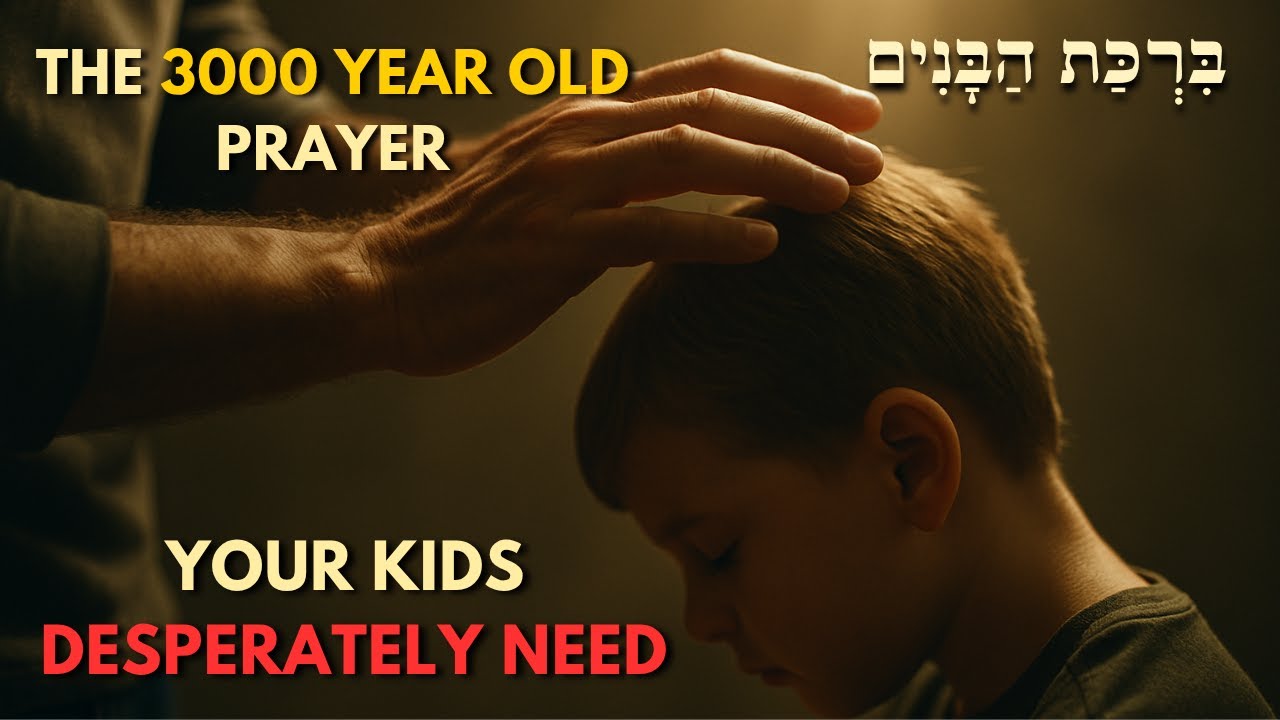
On Friday nights (Shabbat), many parents place a hand on their child’s head and recite Birkat HaBanim, the blessing of children. For boys: “Y’simcha Elohim k’Ephraim u’chiMenasheh” (May God make you like Ephraim and Manasseh). For girls: “Y’simeich Elohim k’Sarah, Rivkah, Rachel, v’Leah” (May God make you like Sarah, Rebecca, Rachel, and Leah). These opening lines connect children to positive biblical role models.
Often, this is followed by the Priestly Blessing. Used together, they form a powerful jewish prayer for protection of children said weekly in countless homes and synagogues around the world.
The Priestly Blessing (Numbers 6:24–26)
This is among the oldest blessings in Jewish tradition. In Hebrew (transliteration): “Y’varechecha Adonai v’yishmirecha; Ya’er Adonai panav eilecha vichuneka; Yisa Adonai panav eilecha v’yasem lecha shalom.” A common English rendering: “May the Lord bless you and protect you. May the Lord shine His face upon you and be gracious to you. May the Lord turn His face toward you and grant you peace.” As a jewish prayer for protection of children, these lines are ideal because they explicitly name protection and peace.
For the full biblical source, see a readable edition of the text at Numbers 6:24–26 on Sefaria.
The Shema and the Bedtime Shema
Many families include the Shema at bedtime. The core line is: “Shema Yisrael, Adonai Eloheinu, Adonai Echad” (Hear, O Israel, the Lord is our God, the Lord is One). The extended Bedtime Shema includes prayers for forgiveness, peace, and angelic guardianship. A traditional phrase many families use is: “B’shem Adonai Elohei Yisrael, mi’mini Michael, u’mismoli Gavriel, u’mil’fanai Uriel, u’me’acharai Refael, v’al roshi Shekhinat El” (In the name of the Lord, God of Israel: may Michael be at my right, Gabriel at my left, Uriel before me, Raphael behind me, and over my head the Divine Presence). As a jewish prayer for protection of children, the bedtime liturgy is both soothing and structured—ideal for winding down.
If you want an accessible overview, see this guide to the Bedtime Shema on My Jewish Learning.
Psalms for protection
Psalms (Tehillim) are widely used for comfort and protection. Two favourites are Psalm 121 (“I lift my eyes to the mountains… My help comes from the Lord… He will guard your coming and your going…”) and Psalm 91 (“He who dwells in the shelter of the Most High…”). You might read a psalm on its own or alongside other prayers as part of a wider jewish prayer for protection of children.
For sources, see the full text of Psalm 121 on Sefaria. Psalm 91 is also easily accessible on the same platform.
How to create a simple home ritual for child protection prayers
You do not need elaborate equipment to make a meaningful routine. Here is a straightforward approach to incorporate a jewish prayer for protection of children into your week, or even your daily schedule.
- Choose your moment. Bedtime and Friday evening are the most common. If life is hectic, pick one night consistently.
- Set the scene. Soft lighting, a clean space, and a calm tone help children settle and associate the moment with care and safety.
- Place a hand gently on the child’s head or shoulder. Physical contact, when welcome, reinforces connection.
- Say the blessing. You might use Birkat HaBanim followed by the Priestly Blessing. If you prefer, recite a psalm or the core Shema line. Even a single line said with intention becomes a sincere jewish prayer for protection of children.
- Add personal words. After the traditional text, speak simply: “May you be safe, kind, and courageous. May you have a peaceful night.”
- Conclude with a kiss or a hug, and a consistent phrase like “Shalom” or “Sleep in peace.”
Sample wordings you can use
If Hebrew is unfamiliar, start with English and add Hebrew gradually. Any clear, caring intention counts. Here are short options you can adapt into your jewish prayer for protection of children at home:
- “May you be watched over in body and spirit. May you be protected from harm and blessed with peace.”
- “Y’varechecha Adonai v’yishmirecha… May the Holy One guard your coming and your going, today and always.”
- “Like Sarah, Rebecca, Rachel, and Leah (or Ephraim and Manasseh), may you grow in wisdom and kindness.”
- “Shema Yisrael… May the One keep you safe through the night and bring you to a bright morning.”
Over time, consider printing a small card with your chosen blessing and keeping it by the child’s bed, so your jewish prayer for protection of children becomes a steady and reassuring part of family life.
Cultural customs that may accompany the prayers
Different communities add small customs to a jewish prayer for protection of children. Some parents light a candle before Shabbat blessings (taking care with safety). Others display a hamsa hand or a mezuzah on the bedroom doorframe. Some tie a red thread to a cot or pram as a folk custom. These items are optional; the heart of the practice is the prayer and the intention. If you are curious about customs’ origins, ask a local rabbi or educator for guidance.
Common mistakes and how to avoid them
Even the best intentions can misfire without care. Here are typical pitfalls when establishing a jewish prayer for protection of children—and how to steer clear of them.
- Rushing the words. Children sense when we hurry. Breathe, slow down, and focus on a steady rhythm.
- Overcomplicating the ritual. Start small. One blessing consistently is better than many said rarely.
- Not explaining the meaning. Briefly tell children why you bless them: “This is how I show love and hope for your safety.”
- Using fear-based language. Emphasise peace, care, and courage, not anxiety or threats.
- Ignoring a child’s comfort. If a child is sensitive to touch or sound, adapt your approach to keep the blessing calm and welcome.
Fitting the practice to your family
There is no single “correct” way to say a jewish prayer for protection of children. The tradition is rich and flexible, allowing you to meet your family’s needs.
Interfaith or multi-background homes
Use shared language that feels authentic to all guardians. Some families alternate Hebrew and English, or pair a traditional Jewish text with a universal message of hope.
Children of different ages
For toddlers, keep it short—perhaps just the Priestly Blessing. For primary school children, add Psalm 121 or the angelic lines from the Bedtime Shema. Teenagers may appreciate being invited to say a line themselves, turning the moment into shared reflection rather than a one-way speech.
When you’re far from home
A jewish prayer for protection of children travels easily. Recite by phone or video call, or send a voice note of the blessing before a sleepover or school trip. Consistency keeps the connection strong.
Community moments and lifecycle events
Beyond daily or weekly routines, you might use a jewish prayer for protection of children at special times: before a medical procedure, at the start of a school year, or during travel. Many synagogues invite families to bless children publicly on the Friday night before a bar/bat/b’nei mitzvah, and some weekly services include communal blessings for youngsters.
On birthdays, families often add a special blessing. If you are looking for practical ideas, see these birthday blessing ideas to help you craft a message that balances celebration and heartfelt protection.
If you enjoy the rhythm of weekly traditions beyond Shabbat, you might find inspiration for weekly blessings useful as you personalise a schedule that helps your family pause and connect.
Ethics and action: pairing prayer with practical care
Prayer is powerful, and for many it is essential. Still, a responsible jewish prayer for protection of children works best when paired with practical safety: age-appropriate guidance about boundaries, online safety, sleep routines, healthy food, and emotional support. In this way, the words of protection are matched by protective actions, embodying Jewish ideals of compassion and responsibility.
Recommended external resources
- Background on blessing children on Friday night (Chabad.org) – History, customs, and texts.
- Overview of parental blessings and practice (My Jewish Learning) – Approaches across communities and tips for home use.
- Priestly Blessing text with translation (Sefaria) – Source for “Y’varechecha Adonai v’yishmirecha.”
- Psalm 121 in Hebrew and English (Sefaria) – A popular psalm of protection.
Frequently asked questions about jewish prayer for protection of children
Do I need to know Hebrew to say a jewish prayer for protection of children?
No. Hebrew is beautiful and meaningful, but intention and clarity matter more than pronunciation. You can start with English translations and, if you wish, add one Hebrew line at a time. Many families find that learning the Priestly Blessing or the opening line of the Shema is a gentle way to begin.
When is the best time to say these prayers?
Friday evening (before the Shabbat meal) and bedtime are the most common moments. Choose a time you can keep consistently. A brief jewish prayer for protection of children said regularly will have more impact than a longer version used rarely.
What if my child resists being blessed?
Respect their space. You might ask permission, keep it very short, or move the blessing to a moment they enjoy—like reading time. Some older children prefer to say part of the blessing themselves. Keep the tone warm and pressure-free.
Are there different versions for sons and daughters?
Yes. The opening line of Birkat HaBanim traditionally differs: Ephraim and Manasseh for boys; Sarah, Rebecca, Rachel, and Leah for girls. Many families also use gender-inclusive language or personalise the opening to suit their child. Whatever version you choose, the Priestly Blessing is universal and often included.
Can I adapt the words to reflect my family’s values?
Absolutely. Judaism encourages kavanah (intention). You might add lines about kindness, courage, or curiosity—qualities you hope your child will develop. As long as the spirit is one of care and reverence, personalising a jewish prayer for protection of children is both appropriate and meaningful.
Is prayer a substitute for practical safety measures?
No. Prayer complements, but never replaces, practical steps like childproofing, teaching safety skills, ensuring appropriate supervision, and seeking professional help when needed. Pairing words of blessing with real-world action is a core Jewish value.
Conclusion on jewish prayer for protection of children
A jewish prayer for protection of children offers a simple, enduring way to speak love and safety over the young people in our care. Whether you recite the Priestly Blessing weekly, say the Shema at bedtime, or read a psalm on days of worry, the practice helps children feel seen and supported—and helps adults articulate hope with clarity and calm.
Start small: one line, one steady moment, one gentle hand on a shoulder. Let the words become familiar, and add to them as your confidence grows. Resources like accessible translations and guides make it easy to learn, and you can keep the focus on intention rather than perfection.
Above all, remember that a thoughtful jewish prayer for protection of children belongs to a wider circle of care. Pair your blessings with practical safety, loving boundaries, and everyday kindness. In doing so, you will build a home in which children are protected not only by sacred words, but by the living habits of compassion, responsibility, and peace.
