Prayer card mary undoer of knots: 5 essential, practical tips
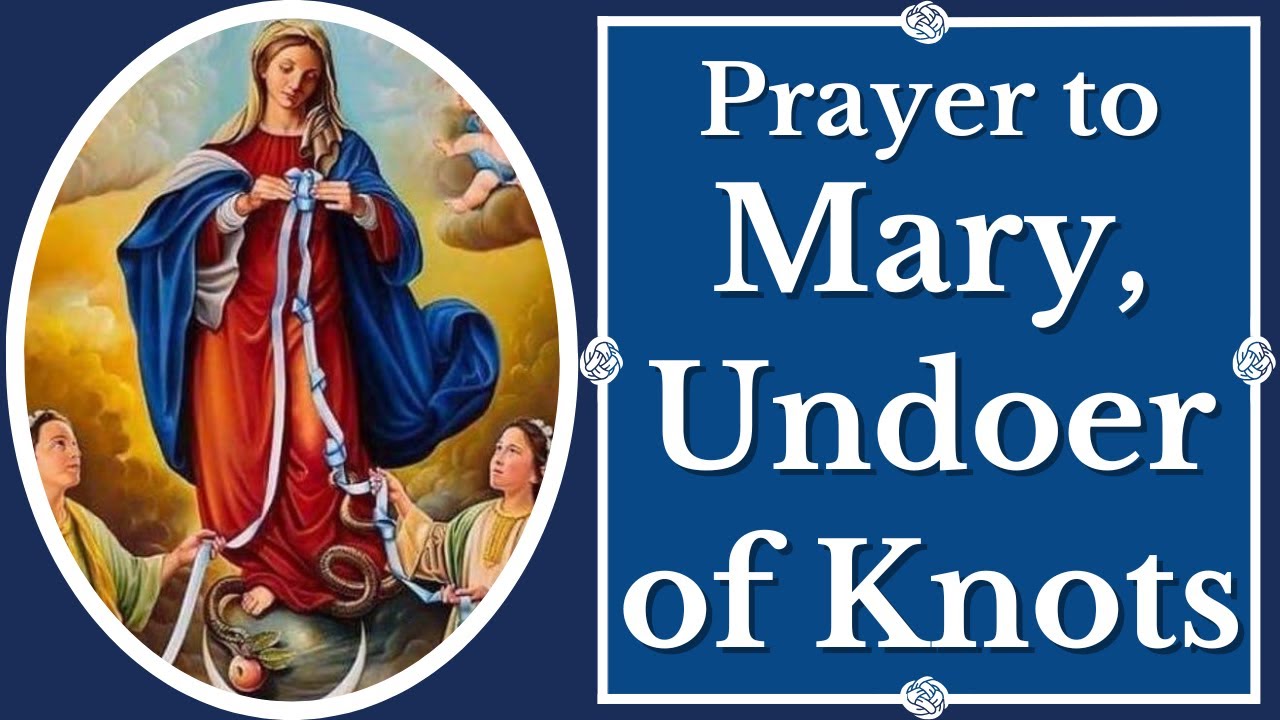
prayer card mary undoer of knots
A prayer card mary undoer of knots is a small, portable devotional aid that helps many Christians bring their worries, obstacles, and complicated situations to Our Lady in prayer. Inspired by the beloved image of Mary gently loosening a ribbon, the card typically combines sacred artwork with a short prayer, a novena, or a reflection that you can keep at hand—at home, at work, in your wallet, or tucked into a Bible.
Whether you are new to the devotion to Mary, Undoer (or Untier) of Knots, or you already hold a strong Marian devotion, a well-chosen card can make prayer more focused, more frequent, and more practical. This guide explains the story behind the devotion, what to look for in a card, how to pray with it, and how to integrate it naturally into your day.
What is a prayer card mary undoer of knots?
At its simplest, a prayer card mary undoer of knots is a holy card—usually credit-card sized—featuring an image of Our Lady Undoer of Knots on one side and a short text on the other. The text may be an excerpt from a novena, a brief prayer for intercession, or a reflection inviting you to surrender “knots” in your life (such as family tensions, habitual sins, indecision, financial troubles, or anxieties) to Mary’s care. The card itself is not a magical object; it is a tool that helps you concentrate your heart and mind on God, asking Our Lady to intercede for you as she “unties” the knots that you cannot loosen alone.
The devotion to Mary, Undoer of Knots centres on trust. By handing her the tangled ribbons of our lives, we imitate the humility of those who gave their problems to Christ. The card serves as a reminder to pray regularly and to persevere when the solutions are not immediate.


Origins and meaning of the devotion
The widely recognised image comes from an 18th‑century painting by Johann Georg Melchior Schmidtner in St Peter am Perlach, Augsburg (Germany). It depicts the Blessed Virgin untying a long ribbon of knots while angels assist at either side and the Holy Spirit hovers above. Beneath, a scene of Tobias with the Archangel Raphael symbolises guidance and healing on life’s journey. For concise background on the painting and devotion, see this overview of the history and symbolism of Mary, Undoer of Knots.
In recent decades the devotion spread worldwide—helped in part by the personal appreciation of it by Pope Francis. The simple, hope-filled image resonates with people who face complex or hidden struggles. A prayer card mary undoer of knots captures that message in a format you can use daily.
What you will typically find on a prayer card mary undoer of knots
Although formats vary, most cards share a recognisable structure:
- Front artwork: the classic painting or a faithful reproduction, often with rich colours and a luminous, peaceful expression on Mary’s face as she unties the ribbon.
- Reverse text: a short prayer or the first day of the novena, a Scripture verse, or guidance on how to entrust specific “knots” to Mary.
- Size and finish: many are laminated for durability; others use matte card stock with a soft touch. Some include gilded edges or a small medal embedded in the card.
- Space for intentions: certain designs offer a small area where you can write a date or a brief intention.
Some publishers offer a full nine-day novena across a set of cards, while others print the entire novena in tiny type on one card. A pocket-sized prayer card mary undoer of knots keeps you from relying solely on memory and gives your hands something to hold while you pray.
How to pray with a prayer card mary undoer of knots
You can use the card in many ways, from a quick morning offering to a structured novena. Here is a simple approach:
- Find a quiet moment. Hold the card and take a slow breath, inviting the Holy Spirit to guide you.
- Name your “knot.” Silently describe the problem as precisely as you can. If helpful, imagine the difficulty as a knot on a ribbon you place in Mary’s hands.
- Read the prayer aloud. Follow the text on the card. If the card contains the novena, pray the relevant day’s section. For a reliable version of the novena, you can refer to the EWTN novena to Mary, Undoer of Knots.
- Rest a moment. Sit with God in silence. Ask for openness to however the Lord chooses to act.
- Close with gratitude. Thank Mary for her intercession, and end with the Sign of the Cross.
If you are undertaking a nine-day novena, try to keep the same intention each day, or specify one main knot with perhaps one or two related concerns. Consistency builds focus and trust. In parish settings, groups often pray with a prayer card mary undoer of knots before a statue or image, sharing intentions discreetly and ending with a hymn or brief Scripture reading.
When and why people use a prayer card mary undoer of knots
People turn to this devotion at moments when obstacles feel stubborn or tangled. Common examples include strained relationships, legal or financial hurdles, decisions about career or vocation, habitual patterns of sin, addiction, spiritual dryness, or confusion about next steps. The beauty of a prayer card mary undoer of knots is that it gently nudges you to return to prayer each time worry resurfaces.
Because a card is easy to carry, it suits busy lives. It can prompt a midday prayer at your desk or a quiet moment on the commute. Some keep one by the bedside and another in a purse or wallet. Over time, the very act of reaching for the card can become a cue to surrender anxiety rather than replay it.
Choosing or designing a prayer card mary undoer of knots
There is no single “correct” design, but a few practical tips help you choose well:
- Artwork fidelity: Look for a faithful image of the original painting or a respectful modern rendering. The expression should communicate peace, mercy, and hope.
- Readable text: If you plan to pray the novena from the card, ensure the font is legible. Ultra-small type can be frustrating.
- Durability: Laminated cards or thicker stock withstand daily handling. If you keep the card in a wallet, rounded corners help prevent wear.
- Language: Select the language you pray in most easily. Bilingual cards are useful for mixed-language households or parish groups.
- Special editions: Weddings, anniversaries, and parish missions sometimes commission a custom prayer card mary undoer of knots with a specific date and intention.
For designers and parish leaders, remember that the classic painting is in the public domain, but individual photographs or retouched versions may have usage rights attached. Choose a high-quality image, keep colour accurate, and ensure that the prayer text is permitted to be reproduced by the publisher, if applicable.
Integrating the card into a daily prayer routine
Because habits drive growth, placing your card where you will see it makes a difference. You might keep it near your kettle for morning tea, in a prayer corner with a candle, or inside your diary. Consider pairing the short prayer with a set time: for instance, before checking emails, when finishing work, or as part of night prayer. Over time, the rhythm matters more than the length.
Many find it helpful to choose a primary intention for a season—one knot to persevere with—while also entrusting other needs more generally. When the situation changes, update your intention. Some write the intention softly in pencil on the back of the card (or on a small slip kept with it) as a sign of commitment.
Scripture, saints, and complementary devotions
The imagery of knots echoes biblical themes of bondage and freedom, as well as mercy and guidance. The presence of the Archangel Raphael in the classic painting hints at healing and companionship on the road. If you are drawn to angelic intercession, you may also appreciate learning more about spiritual helpers such as St Michael; for an accessible overview, see a concise guide to Michael the Archangel. Likewise, those exploring Christian tradition more widely may be interested in the rich Marian and liturgical practices of the East; an introduction to history and beliefs can be found in this overview of the Eastern Orthodox Church.
Short Scripture verses pair well with the card, such as “Cast all your anxieties on him, for he cares for you” (1 Peter 5:7) or “Do not be anxious about anything” (Philippians 4:6–7). You might copy a verse onto a small note and keep it with your card.
Prayer practices with a prayer card mary undoer of knots
Different prayer styles can enrich your use of a prayer card mary undoer of knots:
- Novena focus: Pray the structured nine-day novena, keeping a short journal of insights or small graces you notice each day. This creates a record of God’s faithfulness.
- Breath prayer: Slowly pray one or two lines from the card with your breathing—“Mary, Undoer of Knots, pray for me”—for one minute when you feel tension rising.
- Weekly examen: Once a week, review your week with the card in hand. Where did you see new knots forming? Where did a knot loosen? Offer both to God.
- Family intention: Choose one shared family knot (communication, schedules, finances) and set a brief time to pray the card together, especially on Sundays.
- Alongside the Rosary: Some like to mention their knot before beginning a decade. Others use a Rosary explicitly dedicated to Our Lady Undoer of Knots.
Common mistakes and gentle clarifications
It is natural to approach prayer with hopes for a particular outcome. Still, a few misunderstandings can hinder peace:
- Treating the card as a guarantee: A prayer card mary undoer of knots is a help to prayer, not a promise of a specific result. God answers in his timing and often in unexpected ways.
- Changing intentions too quickly: Constantly switching focus can make it hard to recognise progress. Give your main knot time—often weeks—to begin loosening.
- Praying only under pressure: Build routine. If the card appears only when crisis strikes, stress and distraction may dominate. Regular prayer prepares the heart for storms.
- Going it alone: Inviting a trusted friend to pray for your intention—or offering to pray for theirs—can lighten burdens and foster accountability.
Blessings, sacramentals, and respectful use
Prayer cards are sacramentals when blessed by a priest or deacon. The blessing does not “charge” the item with power; rather, it dedicates it for holy use, encouraging you to approach God with faith. If you wish, you can ask a priest to bless your prayer card mary undoer of knots. Treat blessed items respectfully; if a card wears out, it is customary to dispose of it by burning or burying.
If you are curious about the Pope’s personal connection with the devotion and how the Church invites the faithful to pray amid difficulties, this brief reflection from Vatican News is a good place to start: Pope Francis and prayer to Our Lady, Undoer of Knots.
Gifting and pastoral uses
Because they are compact and affordable, cards make thoughtful tokens of care. Consider a prayer card mary undoer of knots as a gift for someone facing exams, illness, family strain, or major decisions. Parishes often include cards in welcome packs, RCIA materials, or marriage preparation resources. Hospital chaplaincy teams sometimes keep a supply for patients and families who request prayer support.
For group use, you might insert a card into a folded leaflet with a short Scripture passage and space for writing intentions. A common practice is to invite parishioners to write a private intention and keep it with the card for the duration of the novena, then bring a candle to a communal closing prayer service.
Brief guide to the novena on a prayer card mary undoer of knots
Although exact wording varies by source, the heart of the novena is simple. Each day you present the specific knot, ask Mary’s intercession with trust, and commit to patience. Typical themes across nine days include humility, patience, hope, spiritual protection, and thanksgiving. Some versions incorporate a brief meditation on Mary’s life, helping you see how she trusted God’s plan even amid uncertainty.
To begin, choose a start date you can remember (for example, a Monday or the start of a month). Read the daily text on your card, add a short spontaneous prayer in your own words, and close with a Hail Mary. If you miss a day, do not be discouraged—simply continue as soon as possible. The point is not perfection but fidelity.
Preparing heart and home for prayer
A peaceful corner helps. A small candle, an icon or image, and your card are enough. If you share your living space, consider using headphones to listen to gentle sacred music while you pray. Keep a pen nearby to jot down a one-line gratitude or a moment of insight after you finish. Over weeks, you will begin to notice patterns—perhaps a shift in your response to stress, a helpful conversation, or a new idea that unblocks a problem.
Discerning outcomes and next steps
Sometimes the knot you bring changes quickly; more often, grace works quietly over time. If a particular knot remains stubborn, consider whether practical help is available in addition to prayer: a conversation with a mentor, financial advice, counselling, or a sacramental confession for spiritual burdens. A prayer card mary undoer of knots supports these steps by keeping you grounded in hope and reminding you that you are not alone in seeking a way forward.
Good etiquette for using and sharing your card
Because a prayer intention can be very personal, keep your card and any written notes discreet. If a friend notices it and asks, share as much as you are comfortable with and offer to pray for them as well. When gifting a card, include a simple note explaining the devotion so the recipient feels invited rather than pressured. If you belong to a small group, agree on a gentle rhythm for updates—perhaps a quick check-in after the nine days conclude.
Recommended external resources
- For historical background and the original painting, see the encyclopaedia entry on Mary, Undoer of Knots.
- For a reliable novena text, refer to the EWTN novena to Our Lady, Undoer of Knots.
- For a short perspective connected to recent popes, read Vatican News on the Pope’s prayer to Our Lady, Undoer of Knots.
Frequently asked questions about prayer card mary undoer of knots
Is a prayer card mary undoer of knots the same as a novena booklet?
Not exactly. A prayer card is a compact aid with artwork and a short prayer or excerpt; a novena booklet usually contains the full text with reflections. Many cards do include the entire novena in small print, but if the text is hard to read, a separate leaflet or online source can help.
Do I need to have the card blessed?
It is not required, but many people find it meaningful. Once blessed, the card becomes a sacramental—an item set apart to encourage devotion. If it becomes worn, dispose of it respectfully (for example, by burning or burying it rather than throwing it in the bin).
Can I pray for more than one intention at a time?
Yes, but focus helps. You can mention other needs in a brief way, while keeping one primary knot at the centre for the nine days. This makes it easier to notice how God is at work in that specific area.
What if my situation does not improve after the novena?
Keep praying, and consider practical steps alongside prayer. Sometimes the grace given is strength, clarity, or patience rather than an instant solution. You may wish to repeat the novena later, or to combine it with the Rosary or a
