Prayer to mary mother of sorrows: essential, practical guide in 5 steps
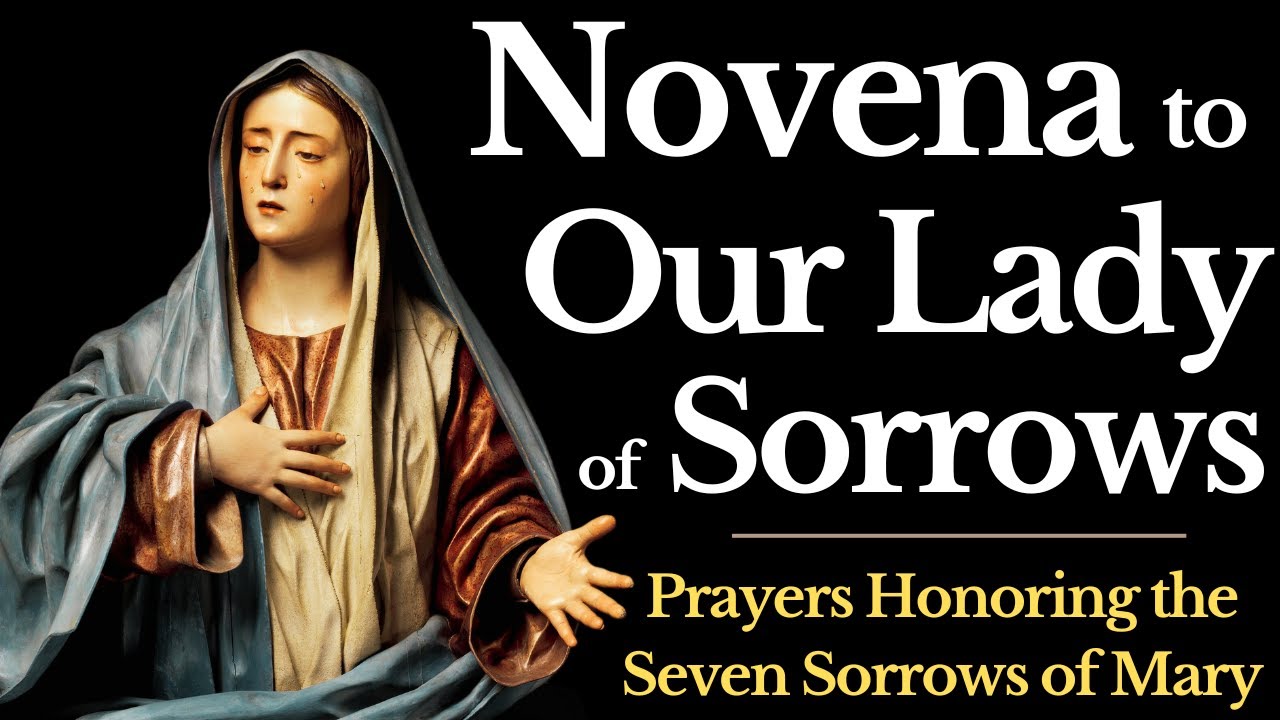
prayer to mary mother of sorrows
The prayer to mary mother of sorrows is a time-honoured Christian devotion that turns to Mary in her grief, seeking compassion, courage and steadfast faith. Centred on the Gospel scenes of the Passion and on Mary’s own “seven sorrows”, it invites us to place our pain and the pain of the world into God’s hands with the humility and strength Mary herself showed.
Many people discover that a simple, sincere prayer to mary mother of sorrows steadies the heart during seasons of loss, uncertainty or anxiety. Whether you are new to this devotion or returning to it after many years, what follows explains its background, meaning and practical ways to pray it today—calmly, confidently and with hope.
While especially known in the Catholic tradition as Our Lady of Sorrows or Mater Dolorosa, the essence of the prayer to mary mother of sorrows is universal: it is a way of joining our suffering to Christ’s, learning empathy at Mary’s side, and allowing God to transform sorrow into love.
What is the prayer to mary mother of sorrows?
At its simplest, the prayer to mary mother of sorrows is a heartfelt conversation with the Mother of Jesus as she stands at the Cross and accompanies Him to the Resurrection. Christians picture Mary as the compassionate mother who understands grief intimately. We ask her to intercede for us—meaning to pray with us and for us—so that our own trials can be met with the same trust in God that she held.


Over centuries, believers have used short invocations, longer litanies and structured devotions (such as the “Seven Sorrows” chaplet) as different forms of the prayer to mary mother of sorrows. Some people pray it during Holy Week, some on 15 September (the Feast of Our Lady of Sorrows), and many whenever they or someone they love is hurting.
Biblical roots: Mary’s seven sorrows
The devotion is Scriptural at heart. It highlights seven Gospel moments often called the Seven Sorrows (or Seven Dolours). Praying the prayer to mary mother of sorrows through these scenes helps us reflect on God’s nearness in suffering. For a concise, pastoral list of these sorrows, see the USCCB overview of the Seven Sorrows.
The prophecy of Simeon (Luke 2:25–35)
In the Temple, Simeon tells Mary a sword will pierce her soul. The first sorrow invites us to face uncomfortable truths while trusting God’s bigger story.
The flight into Egypt (Matthew 2:13–15)
Mary and Joseph flee Herod’s violence with the Infant Jesus. Here we remember refugees and families living with fear, and we ask for protection and provision.
The loss of the Child Jesus in the Temple (Luke 2:41–51)
Mary and Joseph search anxiously for three days. Parents and carers who worry for loved ones can find special comfort in this sorrow.
Mary meets Jesus on the way to Calvary (traditional)
Though not directly narrated in a single verse, Christian tradition meditates on Mary’s heartbroken yet courageous encounter with Jesus carrying His Cross.
The Crucifixion and death of Jesus (John 19:25–30)
Mary stands at the Cross. This is the centre of the devotion: love remaining faithful amid agony, and hope holding steady despite appearances.
The body of Jesus is taken down from the Cross (Mark 15:42–46)
Mary receives her Son’s body. We bring to this sorrow our own losses, farewells and unanswered questions.
The burial of Jesus (John 19:38–42)
Mary consents to the silence of Holy Saturday. We learn to wait, praying for light when the way ahead is dark.
Praying the prayer to mary mother of sorrows with Scripture
To make this devotion more tangible, choose one sorrow and read the relevant Scripture slowly. Picture the scene. Speak to Mary about whatever resonates—a fear you carry, a person you’re concerned for, or a grief that feels heavy. This makes the prayer to mary mother of sorrows more than a formula; it becomes a living meeting with God through Mary’s faithful witness.
How to pray the prayer to mary mother of sorrows step by step
You can pray spontaneously in your own words, or follow a simple pattern. Here is a gentle approach you can adapt to any time frame:
- Create a quiet space. Sit comfortably. If you like, light a candle or place a simple image of Mary nearby.
- Begin by inviting God’s presence. A short prayer such as, “Lord, be with me in this moment,” prepares the heart.
- Address Mary. For example: “Mary, Mother of Sorrows, you stayed with Jesus in His suffering. Please stay with me now.”
- Choose one sorrow. Read the associated Scripture or recall the scene in your own words.
- Speak honestly. Tell Mary what hurts, what you fear, and what you hope for. Ask her to pray that your heart will trust God’s goodness.
- Offer a traditional prayer if you wish. Many conclude each sorrow with an Our Father and a Hail Mary, or with a short refrain like, “Mary, Mother of Sorrows, pray for us.”
- Rest in silence for a minute or two. Let God hold your concerns without forcing an answer.
- Close with gratitude. Thank God for the grace to pray and ask for strength to love in practical ways today.
If you prefer structure, the “Seven Sorrows Chaplet” offers a clear pattern for the prayer to mary mother of sorrows. It uses beads to guide short reflections on each sorrow. You can find helpful, step-by-step instructions here: instructions for the Chaplet of the Seven Dolours.
When and why to pray the prayer to mary mother of sorrows
People turn to this devotion during bereavement, illness or anxiety, but also in everyday frustrations that chip away at peace. The prayer to mary mother of sorrows helps us respond rather than react; it slows us down and makes room for grace. It is meaningful during Lent and Holy Week, and especially on 15 September, the Feast of Our Lady of Sorrows, which you can read about in this background on Our Lady of Sorrows.
Beyond personal needs, it teaches compassion for others. Praying at Mary’s side opens our eyes to neighbours who are struggling—those coping with grief, isolation or fear. The devotion often prompts small acts of mercy: checking in on a friend, writing a note to someone who is grieving, or giving time to a local charity. In this way, the prayer to mary mother of sorrows becomes a pathway from contemplation to loving action.
Examples of short prayers
Short, sincere prayers can carry you through a busy day. You might try one of these as part of your prayer to mary mother of sorrows:
- “Mary, Mother of Sorrows, stand with me at the cross I carry today, and ask your Son to give me courage.”
- “Compassionate Mother, you know my grief. Pray that I may find hope and strength to love others even in pain.”
- “Mater Dolorosa, teach me to trust God when I cannot see the way ahead.”
Common mistakes (and gentle corrections) in the prayer to mary mother of sorrows
- Rushing the process: The aim is not to “get through” the prayers quickly. Slow down, even if you only have five minutes. One thoughtful decade or a single sorrow is enough.
- Focusing only on pain: The devotion is honest about suffering, but it is also about hope. Always close by asking for trust in God’s love.
- Forgetting Scripture: Even a few lines of the Gospel will anchor your reflection. Scripture keeps the prayer to mary mother of sorrows grounded in Christ.
- Separating prayer from action: Let the grace of prayer become kindness in daily life—especially to those who suffer.
- Going it alone: If sorrow feels overwhelming, speak to a friend, pastor or counsellor. Prayer and support go hand-in-hand.
Variations: chaplet, novena and classic hymns
Alongside a spontaneous conversation with Mary, you can explore structured forms of the prayer to mary mother of sorrows:
The Seven Sorrows Chaplet
This uses seven groups of seven beads, each group recalling one sorrow. Many guides explain the pattern; the EWTN resource above is particularly clear for beginners.
Novenas and parish devotions
A nine-day novena can help you persevere in prayer for a particular intention—perhaps healing, guidance, or strength for a family member. Some communities also hold Stations of the Cross with reflections from Mary’s perspective.
Stabat Mater
The “Stabat Mater” is a medieval hymn that meditates on Mary at the Foot of the Cross. Praying or singing it can deepen your reflection; see a concise overview of the history and text of the Stabat Mater for context. You can weave a verse into your personal prayer to mary mother of sorrows, letting the poetry give words to your heart.
Ecumenical and cultural perspectives
While especially prominent in the Catholic tradition, honour for Mary’s faith in suffering resonates beyond one denomination. Many Christians value her as a model of discipleship and steadfast love. In the Christian East, icons such as the Theotokos at the Cross and hymns for Holy Week express similar themes of compassionate endurance. Cultural expressions—processions, musical settings, and artworks titled “Mater Dolorosa”—may differ, but the core invitation of the prayer to mary mother of sorrows remains the same: to stay with Christ in love and to be present to others in their pain.
Pastoral tips for a fruitful practice
- Keep it simple: One sorrow a day can be a beautiful rhythm.
- Use what you have: A printed list of the Seven Sorrows, a bookmark with a short prayer, or a rosary you already own.
- Pray as you are: Bring your real feelings—confusion, anger, numbness. Mary understands.
- Link to Sunday worship: Let the readings at church shape the week’s reflection. The prayer to mary mother of sorrows complements liturgical prayer.
- Offer an intention: Name one person or situation in need each time you pray.
Recommended external resources
- USCCB overview of the Seven Sorrows – brief explanations and a practical outline for prayer.
- Background on Our Lady of Sorrows – history, feast day, and iconography.
- Instructions for the Chaplet of the Seven Dolours – step-by-step guide to the chaplet.
- History and text of the Stabat Mater – context for the classic hymn often used in this devotion.
