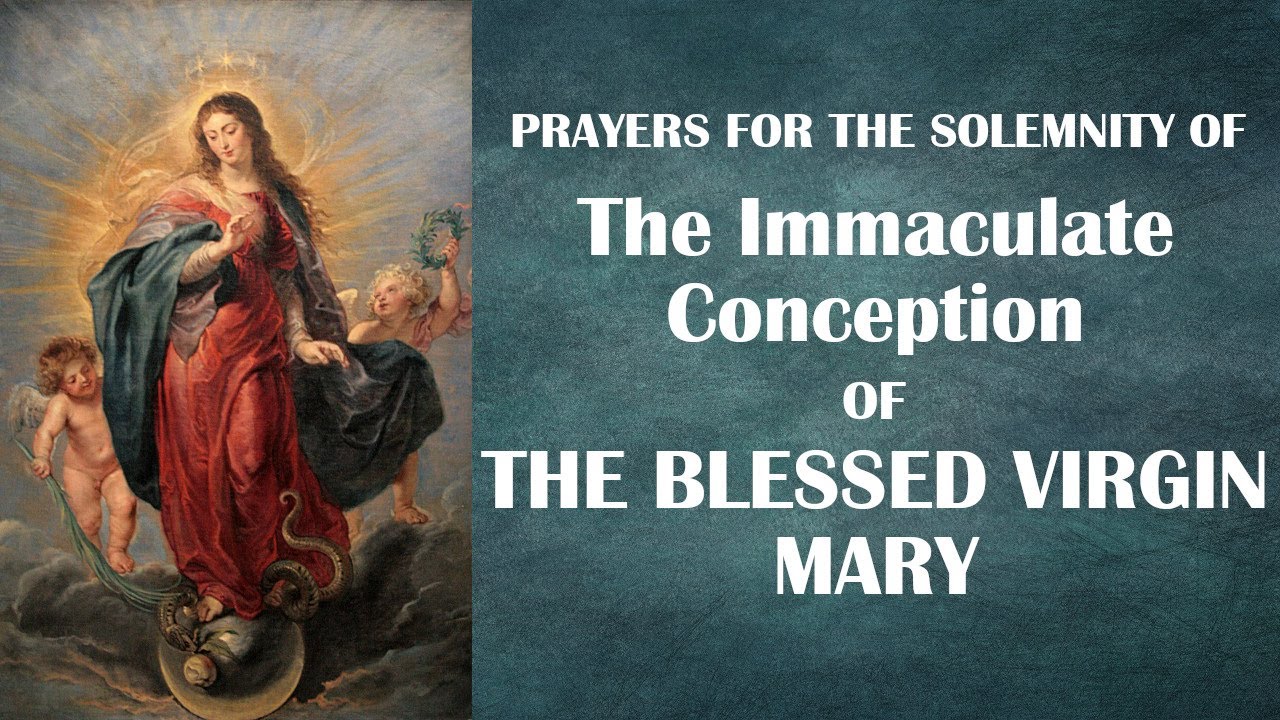
Prayer to the Immaculate Conception of the Blessed Virgin Mary
For many Christians, the prayer to the Immaculate Conception of the Blessed Virgin Mary is both a confession of faith and a heartfelt act of devotion. It focuses on God’s work in Mary from the first moment of her existence, praising the grace that preserved her from original sin and asking her intercession as the Mother of Jesus. Whether you are returning to faith practices after a long time, or you simply want to understand this devotion more deeply, this guide offers clear explanations, practical steps, and gentle suggestions for integrating it into daily life.
In what follows, we will explain what the Immaculate Conception means, why the Church values this devotion, how to pray the prayer to the Immaculate Conception of the Blessed Virgin Mary, and how to avoid common misunderstandings. You will also find examples, a simple structure for personal prayer, and answers to frequently asked questions.
What the Immaculate Conception means—and why it matters
At the heart of the doctrine lies a simple claim: by a singular grace and privilege of Almighty God, in view of the merits of Jesus Christ, Mary was preserved free from all stain of original sin from the first moment of her conception. This dogma, formally defined by Pope Pius IX in 1854, highlights God’s initiative and the superabundant power of Christ’s saving work. When we make a prayer to the Immaculate Conception of the Blessed Virgin Mary, we are recognising and celebrating God’s grace at work in human history through Mary.
It is important to distinguish the Immaculate Conception from the Virgin Birth. The Virgin Birth refers to Jesus being conceived by the Holy Spirit and born of the Virgin Mary; the Immaculate Conception refers to Mary’s conception in the womb of her mother, traditionally named Saint Anne. A prayer to the Immaculate Conception of the Blessed Virgin Mary therefore reflects on Mary’s unique beginning, not the physical manner of Jesus’ conception and birth.

The Catechism of the Catholic Church summarises this clearly and prayerfully. For a reliable teaching reference, see the concise passages on the Immaculate Conception in the Catechism (paragraphs 490–493): official Catechism teaching on the Immaculate Conception.
Why Christians pray in this way
Christians turn to the prayer to the Immaculate Conception of the Blessed Virgin Mary for several reasons. It acknowledges God’s gracious plan, honours Mary in a way that ultimately points to Christ, and asks for her maternal intercession as a trusted companion on the journey of discipleship. In this devotion, Mary is never separated from Christ; she is his first and most perfect disciple, entirely receptive to God’s Word, and a model for us.
Spiritual fruits of prayer to the Immaculate Conception of the Blessed Virgin Mary
- Gratitude for grace: The prayer fosters a thankful heart by contemplating the primacy of God’s action in Mary’s life.
- Purity of intention: Reflecting on Mary’s freedom from sin encourages us to ask for renewed purity of heart and mind.
- Trust in intercession: Believers find comfort in asking Mary to pray with and for them, especially when seeking healing, conversion, or perseverance.
- Mission and mercy: As we receive mercy, we are moved to share it with others through acts of kindness and service.
When the Church emphasises this devotion
The Solemnity of the Immaculate Conception is celebrated on 8 December, making it a natural occasion for a novena (nine days of prayer) leading up to the feast. Many also include this devotion within the Rosary or during Advent as a way to prepare the heart for Christmas. For a pastoral overview, the United States Conference of Catholic Bishops has a helpful page on the solemnity: background on the Solemnity of the Immaculate Conception.
How to pray the prayer to the Immaculate Conception of the Blessed Virgin Mary
If you are new to Marian devotions, do not worry. A prayer to the Immaculate Conception of the Blessed Virgin Mary can be brief and simple, or longer and more meditative. What matters is sincerity of heart and attentiveness to God.
Step-by-step guide
- Find a quiet place: Choose a time and space where you can pray without distractions.
- Become present to God: Begin with the Sign of the Cross, or a slow, deep breath, acknowledging that God is near.
- Set an intention: Offer your prayer for a person, a need, or a situation. Keep it concrete and honest.
- Pray the text: Use a traditional formula or your own words. The key is to reflect on God’s grace in Mary and to ask for her intercession.
- Pause in silence: Allow a short moment after the words to rest in God’s presence.
- Close with gratitude: Conclude with a simple thank you or a familiar prayer such as the Glory Be.
A simple traditional formula
Consider this well-loved invocation, often associated with the Miraculous Medal devotion: “O Mary, conceived without sin, pray for us who have recourse to thee.” You can say it once, or repeat it prayerfully, letting the words become a rhythm of trust.
A short example of personal prayer
Below is a brief, adaptable prayer to the Immaculate Conception of the Blessed Virgin Mary:
“Most holy Mother, Immaculate from the first moment of your conception, you received the fullness of God’s grace. I praise God for his mercy and ask you to intercede for me, that I may turn away from sin and love God with a pure heart. Help me to follow your Son with courage, serve my neighbour with joy, and stay faithful in trial. O Mary, conceived without sin, pray for us who have recourse to thee. Amen.”
You can also weave this devotion into the Rosary, pausing after each decade to say the invocation, or praying a brief prayer to the Immaculate Conception of the Blessed Virgin Mary before beginning the Joyful Mysteries.
Variations and when to use prayer to the Immaculate Conception of the Blessed Virgin Mary
There is no single mandated wording for a prayer to the Immaculate Conception of the Blessed Virgin Mary. The form you choose can reflect your needs and the liturgical season. Consider these common variations:
- Daily aspiration: Simply repeat the short invocation throughout the day, especially when facing temptation or stress.
- Novena: Pray for nine days leading up to 8 December, including a Scripture reading, a moment of reflection, and the short invocation.
- Family prayer: Parents and children can pray together, thanking God for Mary and asking for help to grow in virtue.
- Rosary integration: Add the brief invocation after each decade or at the end of the Rosary.
A novena approach can be especially fruitful. Choose a theme for each day—such as humility, faith, hope, charity, purity of heart, courage, mercy, perseverance, and gratitude—and end by making a simple prayer to the Immaculate Conception of the Blessed Virgin Mary that gathers these themes into a unified petition for grace.
What different Christian traditions say
While the Roman Catholic Church defines the Immaculate Conception as dogma, Christian traditions differ in how they express (or question) this teaching. The Eastern Orthodox Church perspective deeply venerates Mary as All-Holy (Panagia) and affirms her lifelong holiness, yet historically articulates original sin and Mary’s holiness in terms distinct from the Catholic definition. Many Protestant communities, meanwhile, emphasise Scripture alone as the theological norm and hesitate to accept what they see as later doctrinal developments.
If you come from a Reformation background, you may find it helpful to explore how Catholic teaching on Mary is intended to magnify Christ’s saving work rather than diminish it. For a doctrinal contrast on sin, grace, and the effects of the Fall, see a primer on Calvinist views on grace and sin and consider how Catholic and Reformed traditions interpret Mary in the light of their broader soteriology.
Common misunderstandings and how to avoid them
Because the title can be confusing, a prayer to the Immaculate Conception of the Blessed Virgin Mary is sometimes misinterpreted. Here are frequent misconceptions and their clarifications:
- “It refers to Jesus’ conception.” No—this devotion concerns Mary’s conception. The Virgin Birth is a separate, though related, mystery.
- “It means Mary didn’t need Jesus.” Quite the opposite. Catholic teaching insists that Mary’s preservation from sin was entirely by God’s grace, in view of Christ’s merits. She is the first fruit of Christ’s redemption, not an exception to it.
- “It is worship of Mary.” Catholics venerate (honour) Mary; worship (adoration) belongs to God alone. The prayer asks Mary’s intercession, trusting that the prayers of the righteous avail much.
- “It is magic.” Christian prayer is not a technique to force outcomes. It is relational: opening our hearts to God and cooperating with grace.
Scripture, art, and culture
Although the term “Immaculate Conception” does not appear in the Bible, the Church reads several passages through this lens, especially Luke 1:28 (“Full of grace”) and Genesis 3:15 (the Protoevangelium). Many believers find that reflecting on Marian art—such as images of Mary clothed with the sun (Revelation 12)—deepens their meditation and gives their prayer to the Immaculate Conception of the Blessed Virgin Mary a vivid, contemplative dimension.
For a balanced historical overview, including theological debates and cultural influence, see the Encyclopaedia Britannica article on the Immaculate Conception and the comprehensive summary on Wikipedia’s Immaculate Conception page. These resources offer accessible background to complement a more prayerful approach.
Practical tips for a meaningful devotion
- Keep it Christ-centred: Let every prayer to the Immaculate Conception of the Blessed Virgin Mary end in praise of Christ, the source of Mary’s holiness.
- Start small: If you are beginning, say the short invocation once in the morning and once before bed.
- Pair with Scripture: Read Luke 1:26–38 or Psalm 51, then make your prayer. Let God’s Word frame your intention.
- Write intentions: Keep a small notebook. Date each entry and record how your petition changes over time.
- Combine with acts of mercy: Consider linking your devotion to a habit of generosity—checking in on a neighbour, donating to a food bank, or volunteering your time.
- Use reminders: A holy card or a Miraculous Medal can nudge you to lift your heart to God during the day.
Recommended external resources
- Catechism of the Catholic Church on the Immaculate Conception (paras. 490–493)
- USCCB overview of the Solemnity of the Immaculate Conception
- Encyclopaedia Britannica: Immaculate Conception—history and theology
- Wikipedia: Immaculate Conception—comprehensive summary and references
Related articles
Frequently asked questions about prayer to the Immaculate Conception of the Blessed Virgin Mary
Is the Immaculate Conception in the Bible?
The phrase itself is not in Scripture, but the Church sees foundations in texts like Luke 1:28 (“Full of grace”) and Genesis 3:15, read in the light of Christ’s saving work. The prayer to the Immaculate Conception of the Blessed Virgin Mary therefore arises from a biblical vision of God’s prevenient grace at work in Mary.
How often should I pray this devotion?
There is no fixed rule. Some pray the short invocation several times a day; others use it seasonally (e.g., during Advent) or as a nine-day novena before 8 December. Start with a small, sustainable practice and build from there.
Can non-Catholics make a prayer to the Immaculate Conception of the Blessed Virgin Mary?
Yes. While not all Christians accept the dogma, anyone can pray, thanking God for Mary’s holiness and asking to grow in grace. If you are from a different tradition, you might frame the prayer around Mary’s discipleship and God’s mercy made visible in her life.
What is the difference between the Immaculate Conception and the Virgin Birth?
The Immaculate Conception concerns Mary’s conception, preserved from original sin. The Virgin Birth concerns Jesus’ conception by the Holy Spirit and birth from Mary. A prayer to the Immaculate Conception of the Blessed Virgin Mary will focus on Mary’s beginning and the grace she received.
Is this devotion the same as the Miraculous Medal?
They are related but not identical. The Miraculous Medal devotion includes the invocation “O Mary, conceived without sin…,” which echoes the Immaculate Conception. Many people integrate the two devotions, but one can pray to the Immaculate Conception of the Blessed Virgin Mary without wearing the medal.
What should I do if I struggle with Marian prayers?
Begin with Christ. Ask Jesus to show you how to honour his mother rightly. Keep your prayer simple, centred on God’s grace. Over time, a gentle prayer to the Immaculate Conception of the Blessed Virgin Mary can become a doorway to deeper trust in Christ.
Conclusion on prayer to the Immaculate Conception of the Blessed Virgin Mary
At its core, the prayer to the Immaculate Conception of the Blessed Virgin Mary is a humble response to God’s surprising generosity. By contemplating Mary’s beginning in grace, we recall that God always takes the initiative in salvation and invites us to cooperate freely with that grace. This devotion keeps our gaze on Christ, who makes all things new.
Whether you pray a simple daily invocation or undertake a novena before 8 December, let this practice form your heart in gratitude, purity of intention, and mercy toward others. A sincere prayer to the Immaculate Conception of the Blessed Virgin Mary can become a steady thread through the day, reminding you to entrust every need to God through the mother he gave us.
If you are new to this devotion, start small, stay consistent, and keep it anchored in Scripture and the sacraments (if these form part of your tradition). Over time, the prayer to the Immaculate Conception of the Blessed Virgin Mary can help you grow in discipleship, confidence in God’s grace, and love for Christ, the one who has done great things in Mary—and longs to do great things in you.
