Traditional prayer to Our Lady of Sorrows: essential guide in 7 steps
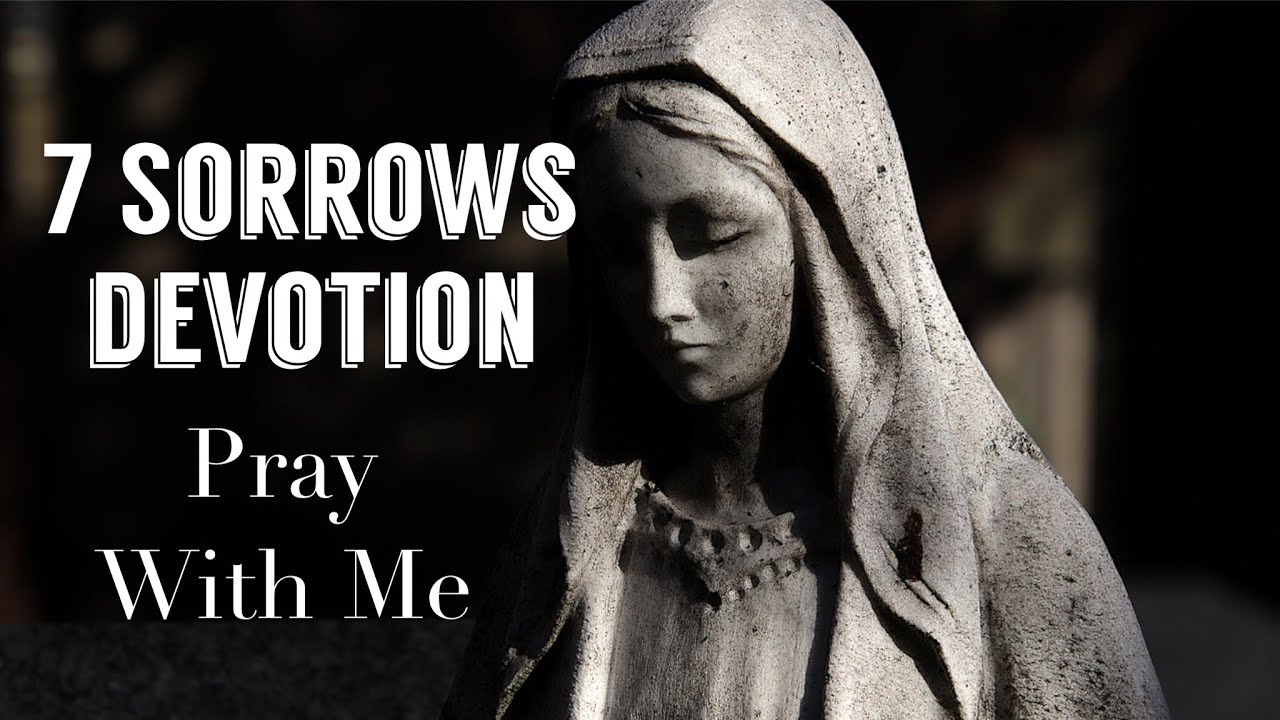
traditional prayer to our lady of sorrows
The traditional prayer to our lady of sorrows is a time-honoured way of drawing close to Mary as she shares in the suffering of Christ. Many people turn to this devotion for comfort, courage, and compassion when life feels heavy. In this guide, we will explore where the devotion comes from, what it involves, how to pray it step by step, and how to weave it meaningfully into daily life without fuss or overcomplication.
Whether you are returning to the faith, exploring new prayer practices, or simply looking for a grounded, peaceful way to pray, the traditional prayer to our lady of sorrows offers a gentle path. It helps us reflect on the Seven Sorrows of Mary, cultivate empathy for the suffering of others, and deepen trust in God’s presence through grief and beyond.
What is the traditional prayer to our lady of sorrows?
In the Catholic tradition, devotion to Our Lady of Sorrows centres on seven key moments of Mary’s sorrow, closely united to the Passion of her Son. The phrase “traditional prayer to our lady of sorrows” usually refers to two main forms: the Chaplet (or Rosary) of the Seven Sorrows and the recitation or meditation of the Stabat Mater, the medieval hymn that poetically contemplates Mary standing at the foot of the Cross.
While there are variations, the heart of the devotion is simple: to be with Mary as she stood with Jesus, to ponder her pain with love and reverence, and to ask her maternal intercession for ourselves and for those who suffer. Over time, this has become a beloved way to cultivate compassion, patience, and hope.


Historical roots and meaning
The devotion became widely known through the Servite Order (the Order of the Servants of Mary) in the 13th century. The Servites encouraged the faithful to reflect on Mary’s sorrows as a way to grow in holiness and imitate her steadfastness. The Stabat Mater—often attributed to the Franciscan poet Jacopone da Todi—gave this devotion its enduring voice, and the Church observes the Memorial of Our Lady of Sorrows on 15 September, the day after the Feast of the Exaltation of the Holy Cross.
Historically, Catholics have practised this prayer during Lent and in September, the month especially dedicated to Our Lady of Sorrows, but it is fitting at any time of sorrow, grief, or trial. The traditional prayer to our lady of sorrows remains a meaningful way to combine Scripture, reflection, and intercession within a coherent and consoling practice.
Core forms of the devotion
The Chaplet of the Seven Sorrows
The Chaplet (sometimes called the Seven Dolours Rosary) includes seven “decades” of reflections, each focused on one of Mary’s sorrows and typically accompanied by seven Hail Marys. Between each sorrow, a short refrain may be used. This is a flexible format—some pray with beads, others simply follow the sequence and keep count mentally.
The Stabat Mater hymn
This hymn is a classic meditation on Mary at Calvary, often sung or read during Lent and on Marian memorials. Many find it helpful to read a few stanzas slowly, allowing the language to prompt reflection. The hymn is public domain in its original Latin and in many translations.
Short daily invocations
If you are short on time, a simple daily invocation can still keep the devotion alive. For example: “Our Lady of Sorrows, stand with me under the crosses of today and lead me to Christ’s peace.” Or you might say a brief act of trust whenever you face a difficult moment, offering your sorrow to Jesus through Mary.
How to pray the traditional prayer to our lady of sorrows: a step-by-step guide
Here is a straightforward way to begin. Feel free to adapt the words and rhythm to your season of life.
- Find a quiet space. Sit or kneel comfortably. Take a deep breath and place yourself in God’s presence.
- Make an intention. Offer this time for someone who suffers, for personal healing, or for the grace to grow in compassion.
- Begin with the Sign of the Cross and, if helpful, an Act of Contrition. You might also add a simple opening prayer, such as: “Lord Jesus, through the sorrowful heart of Mary, teach me to love as you love.”
- For each of the Seven Sorrows:
- Announce the sorrow and, if possible, read the related Scripture verse.
- Pause for a quiet moment of reflection.
- Pray seven Hail Marys. Between each sorrow you may add: “Holy Mary, Mother of God, make my heart like yours.”
- Close with a concluding prayer such as: “Our Lady of Sorrows, compassionate and faithful, intercede for me, for my loved ones, and for all who suffer, that we may find strength in Christ. Amen.”
- End with the Sign of the Cross. Take a brief moment to notice any peace, insight, or prompting you have received.
For some, the traditional prayer to our lady of sorrows might be the full Chaplet each Friday. For others, it may simply be one sorrow a day, slowly and prayerfully. What matters most is consistency, attention, and charity.
Scriptural foundations for meditation
The Seven Sorrows arise directly from the Bible. You can pray with them using these references:
- 1. The Prophecy of Simeon (Luke 2:22–35) — Mary hears that a sword will pierce her soul.
- 2. The Flight into Egypt (Matthew 2:13–15) — The Holy Family flee to protect the Child Jesus.
- 3. The Loss of the Child Jesus in the Temple (Luke 2:41–50) — The anxious search and relief upon finding him.
- 4. Mary Meets Jesus on the Way to Calvary (Luke 23:26–31; John 19:17) — A mother’s heartbreak as she sees her Son suffer.
- 5. The Crucifixion and Death of Jesus (John 19:25–30) — Mary stands at the foot of the Cross.
- 6. Jesus Is Taken Down from the Cross (Mark 15:42–46) — The Pietà: Mary receives her Son’s body.
- 7. Jesus Is Laid in the Tomb (John 19:38–42) — The final sorrow before the dawn of Resurrection.
Reading even a few verses for each sorrow enriches the traditional prayer to our lady of sorrows by anchoring your meditation in the Word of God. If you prefer, use a faithful translation and read aloud slowly, letting one phrase speak to your heart.
Why the traditional prayer to our lady of sorrows matters today
Modern life brings many hidden crosses: anxiety, loss, injustice, loneliness. This devotion invites us to meet those realities honestly while holding fast to hope. Mary’s sorrows do not end in despair; they deepen her trust in God. When we pray with her, we learn to carry our own grief with grace and to support others with tenderness.
Moreover, the traditional prayer to our lady of sorrows strengthens our sense of solidarity. We remember persecuted communities, grieving families, carers, refugees, and the sick. Praying in this way can gently reorient us from self-focus to compassionate service.
Spiritual benefits and pastoral wisdom
- Compassion: Walking with Mary softens the heart and makes us more ready to comfort others.
- Perseverance: Regular reflection on the Cross teaches patience and courage in trials.
- Hope: Even amid sorrow, the devotion points toward Resurrection. It is not pessimistic; it is honest and hopeful.
- Purity of intention: The simplicity of the prayers helps us pray from the heart, without performance or pressure.
If you are struggling, let the words carry you. When you cannot find your own prayer, the traditional prayer to our lady of sorrows can be your steady companion.
Common mistakes to avoid
- Rushing: Slow down. Allow silence between the sorrows. Depth matters more than quantity.
- Confusing devotions: The Seven Sorrows devotion is related to but distinct from the Sorrowful Mysteries of the Rosary.
- Forgetting Scripture: A short biblical reading before each sorrow keeps the meditation grounded.
- Overemphasising pain: The focus is love in suffering, not suffering for its own sake. Always keep hope in view.
- Thinking it’s just for Lent: The devotion is fitting year-round, especially in September and on Fridays.
- Neglecting intention: Offer the prayer for someone specific. Intention brings clarity and compassion.
Fitting it into your week: practical patterns
- Friday focus: Pray all seven sorrows each Friday, uniting with Christ’s Passion.
- Daily rhythm: Take one sorrow each day. Seven days, seven steps, steady progress.
- Monthly remembrance: During September, the month of Our Lady of Sorrows, choose a consistent time—mornings, lunch breaks, or evenings.
- Family or group prayer: Share leadership of the readings and Hail Marys. Keep it simple and brief, especially with children or newcomers.
If you are new to Marian prayer, begin with five minutes a day and grow from there. A small, faithful habit will carry you further than sporadic intensity.
Connections with the wider Christian tradition
While this devotion is especially prominent in Catholic life, Christians across traditions honour Mary’s unique discipleship and her presence at the Cross. Learning how different communities understand Mary can broaden our appreciation of the Communion of Saints. For a helpful background, see this concise overview of the Eastern Orthodox Church and its approach to the Mother of God in liturgy and iconography.
The traditional prayer to our lady of sorrows also sits alongside other classic devotions focused on spiritual battle, mercy, and hope—for instance, the longstanding devotion to the holy archangels. If you are exploring complementary practices, you might appreciate this introduction to devotion to Saint Michael the Archangel, often invoked for protection and courage.
Helpful references in context
The Church has consistently encouraged popular devotions that lead us to Christ, provided they remain Scriptural, balanced, and connected to the liturgy. The Holy See’s guidance in the Directory on Popular Piety offers wise principles; see the official text here: Directory on Popular Piety and the Liturgy. For a succinct overview of the history and themes of Our Lady of Sorrows, this encyclopaedic article is also clear and accessible: Our Lady of Sorrows – background, feast, and devotion.
You may also find practical guidance for the Chaplet format, along with the text of the Stabat Mater and devotional prayers, at respected Catholic resources such as EWTN’s guide to the Seven Sorrows of Mary. Referring to these sources can help you keep the traditional prayer to our lady of sorrows both faithful and accessible.
Recommended external resources
- Official Directory on Popular Piety and the Liturgy (Vatican)
- Comprehensive overview of Our Lady of Sorrows (Wikipedia)
- Practical outline of the Chaplet of the Seven Sorrows (EWTN)
Frequently asked questions about traditional prayer to our lady of sorrows
Is the traditional prayer to our lady of sorrows the same as the regular Rosary?
No. The standard Rosary has five decades. The Seven Sorrows devotion is structured around seven specific moments of Mary’s grief, with seven Hail Marys for each sorrow. Some use special beads; others simply keep count.
Do I need a particular booklet or medal to pray it properly?
Not at all. The essentials are Scripture, a brief reflection, and the prayers themselves. A small card or printout with the seven passages can help, but the heart of the prayer is your intention and attention.
When is the best time to pray the traditional prayer to our lady of sorrows?
Any time is suitable. Many people choose Fridays, the month of September, or the Memorial of Our Lady of Sorrows (15 September). In times of personal grief or anxiety, the devotion can be a steadying daily practice.
Can I combine this devotion with other prayers or the Mass?
Yes. The devotion complements the liturgy and other prayers beautifully. You might meditate on one sorrow before Mass or pray the Chaplet on Fridays alongside the Stations of the Cross.
Is this devotion only for Catholics?
While rooted in Catholic tradition, many Christians appreciate its Scriptural focus and its emphasis on compassion at the foot of the Cross. Anyone who wishes to reflect on Christ’s Passion through Mary’s eyes may find it helpful.
What if I become overwhelmed by sorrow while praying?
Go gently. Keep your reflections brief, breathe, and remember the goal is love and hope, not heaviness. If needed, pause and simply rest in God’s presence, or ask Mary to carry your burden to Christ.
Conclusion on traditional prayer to our lady of sorrows
The traditional prayer to our lady of sorrows is a simple, profound way to meet Christ in the company of his Mother. It invites us to slow down, read the Scriptures, and let compassion deepen within us. Through the Chaplet, the Stabat Mater, or a short daily invocation, we learn to carry our crosses with love and to stand beside those who suffer.
Rooted in centuries of Christian practice, the devotion is accessible to anyone who longs for peace and courage. If you are seeking a prayer that is steady, scriptural, and deeply human, the traditional prayer to our lady of sorrows may become a trusted companion on your faith journey.
Above all, let this devotion lead you to Jesus. With Mary, we face sorrow honestly while holding fast to Resurrection hope. Begin simply, keep going kindly, and allow the traditional prayer to our lady of sorrows to form your heart in compassion.
