Prayer to mary hail holy queen: essential, complete guide
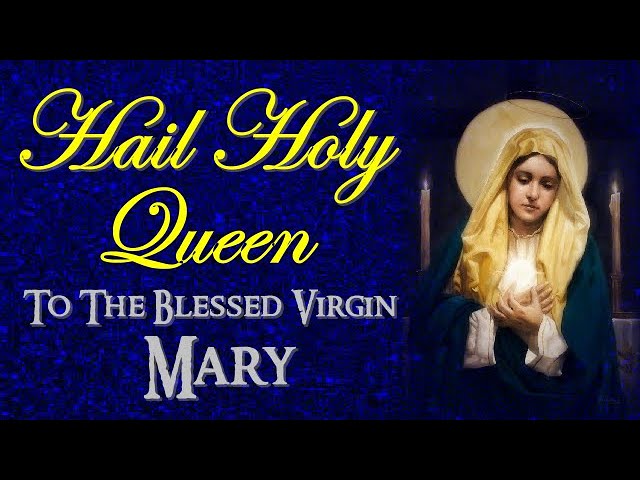
prayer to mary hail holy queen
The prayer to mary hail holy queen is one of the most loved Marian devotions in the Christian world. Often known by its Latin title, the Salve Regina, it is a prayer of trust and hope addressed to Mary, the mother of Jesus, and is customarily said at the end of the Rosary. For centuries, believers have turned to this prayer for comfort in sorrow, guidance in confusion, and renewed confidence in Christ. In this article, we explore its meaning, history, and practical use, and offer simple tips to integrate the prayer to mary hail holy queen into daily life.
Whether you are returning to faith practices, exploring Catholic spirituality for the first time, or simply curious about Christian tradition, a clear understanding of the prayer to mary hail holy queen can enrich your prayer life and deepen your appreciation of Christian heritage. You need not be an expert to start; all you need is a quiet moment and a sincere heart.
What is the prayer to mary hail holy queen?
The prayer to mary hail holy queen is a traditional petition for Mary’s intercession. It acknowledges her as “Mother of mercy” and asks her to turn her eyes of compassion towards us and lead us to her Son, Jesus. The prayer is not a replacement for prayer to God; rather, it is a request that Mary, as the mother of Christ and a model disciple, pray for us and guide us towards Him. In Christian theology, this is veneration, not worship.
Known in Latin as the Salve Regina, the Hail, Holy Queen forms part of the standard conclusion to the Rosary, is sung at the end of Compline (Night Prayer) in many monastic communities during certain seasons, and is prayed privately by millions worldwide. Because of this widespread use, the prayer to mary hail holy queen has become a familiar and comforting refrain in times of grief, decision, or transition.

Origins and history of the Hail, Holy Queen
The Salve Regina dates to the medieval period and is commonly associated with the 11th century. It is frequently attributed to Blessed Hermann of Reichenau (Hermannus Contractus), a scholar and monk whose works include hymns and sequences. From monasteries, the prayer spread throughout Western Christendom, finding a home in liturgy, devotion, and sacred music. Over time, it became especially linked with the end of the daily Office of Compline and with Marian processions and feasts.
As the Rosary developed in its familiar form, the Hail, Holy Queen became its closing prayer in many places. This placed the prayer at the heart of popular piety—accessible not only to monks and clergy, but to laypeople and families. Its language, rich in tenderness and biblical echoes, resonated across cultures and eras.
The text of the prayer and its meaning
The English text
A commonly used English version is:
“Hail, holy Queen, Mother of mercy, our life, our sweetness, and our hope. To thee do we cry, poor banished children of Eve; to thee do we send up our sighs, mourning and weeping in this vale of tears. Turn then, most gracious Advocate, thine eyes of mercy towards us, and after this our exile show unto us the blessed fruit of thy womb, Jesus. O clement, O loving, O sweet Virgin Mary.
V. Pray for us, O holy Mother of God.
R. That we may be made worthy of the promises of Christ.”
Key themes and a line-by-line meditation
- Hail, holy Queen, Mother of mercy: The prayer opens with reverence for Mary’s unique role. “Mother of mercy” reflects confidence in God’s mercy made tangible through her maternal care, always pointing to Christ.
- Our life, our sweetness, and our hope: Poetic phrases describing how Mary’s intercession encourages the faithful to persevere and remain focused on Jesus, the true source of life and hope.
- Poor banished children of Eve: An acknowledgment of the human condition—our struggles, sins, and separation from perfect communion with God—echoing the story of Genesis and our need for redemption.
- Vale of tears: Life’s hardships are real. The prayer gives words to sorrow while turning sorrow toward trust and prayer.
- Most gracious Advocate: Mary is asked to intercede, to “advocate” for us before God, much as a loving mother pleads for her children’s good.
- Blessed fruit of thy womb, Jesus: The centre of Christian faith is Jesus. Mary’s mission is always to lead us to Him; the prayer culminates by naming Him.
- Pray for us: The final response makes the request explicit: we seek prayers that we may be “made worthy of the promises of Christ”—to live and finish well in faith.
Salve Regina, chant and sacred music
In Latin, the prayer begins “Salve, Regina, mater misericordiae…”. Over centuries, it has inspired Gregorian chant settings and polyphonic arrangements by composers such as Palestrina, Victoria, and Charpentier. Sung versions allow the words to be savoured and prayed slowly. Many find that the musical form deepens contemplation and keeps the prayer present in memory throughout the day.
How to pray the prayer to mary hail holy queen
There is no single “correct” method, but these simple steps can help you pray the prayer to mary hail holy queen with focus and peace:
- Begin by finding a quiet place. You may sit or kneel. If you use a rosary, hold the cross gently to centre your mind on Christ.
- Make the Sign of the Cross if that is your custom. Take a slow breath, bringing to mind anyone you wish to pray for.
- Pray the Hail, Holy Queen slowly. If you are comfortable, pause after each phrase to let the meaning settle.
- Conclude with the short dialogue: “Pray for us, O holy Mother of God… That we may be made worthy of the promises of Christ.”
- Finish with a moment of silence, giving thanks, or with another brief prayer such as “O God, whose Only Begotten Son…” (often used after the Hail, Holy Queen in the Rosary).
Many people include the prayer to mary hail holy queen after the five decades of the Rosary. Others pray it at night as they review the day. In times of grief or anxiety, its gentle words can offer calm and reassurance.
Why the prayer matters: spiritual fruits
The prayer to mary hail holy queen does several things at once. It gives you honest language for life’s difficulties (“mourning and weeping in this vale of tears”), yet it keeps your gaze lifted to Jesus through Mary’s intercession. For those who struggle to pray in seasons of loss or confusion, its familiar rhythm can be a lifeline. Over time, this prayer can help cultivate trust, patience, and a more Christ-centred focus in daily decisions.
Importantly, the prayer also situates personal suffering within the wider Christian story. We are not alone; we are part of a communion of believers spanning centuries and continents. If you are curious about the scale of the Christian family today, this brief overview of the global number of Christians offers helpful context.
Clarifying a common concern: veneration and worship
Some people worry that addressing Mary might blur the line between honouring saints and worshipping God. Christian teaching draws a clear distinction: worship (adoration) belongs to God alone; veneration (honour) recognises the work of God’s grace in Mary and the saints and asks for their prayers. The prayer to mary hail holy queen is a petition for intercession; its goal is always to draw us to Christ.
Using the prayer in everyday life
Here are a few simple ways to integrate the Hail, Holy Queen into your routine:
- Evening reflection: After reviewing the day, pray the Hail, Holy Queen, naming one blessing and one challenge.
- Family prayer: Keep the language gentle and explain unfamiliar phrases to children. Visuals—a candle, a simple image of Mary pointing to Christ—can help.
- Moments of sorrow: When words are hard to find, let the prayer carry you. It holds both lament and hope in balance.
- Pilgrimages and feast days: Many churches sing or recite the prayer to mark Marian feasts or conclude devotions.
Common mistakes to avoid with the prayer to mary hail holy queen
- Treating it like a “magic formula”: The prayer is not a charm; it is a heartfelt petition. Pray it slowly and sincerely.
- Forgetting its Christ-centred focus: The final petition leads to Jesus. Keep that focus in mind as you pray.
- Rushing: The language is rich and deliberate. A measured pace helps the meaning sink in.
- Skipping understanding: If certain phrases puzzle you (“poor banished children of Eve,” “vale of tears”), take a moment to learn their scriptural echoes.
The prayer to mary hail holy queen across Christian traditions
While most closely associated with the Catholic Church, the Hail, Holy Queen is also known among some Anglicans and Lutherans, especially where the Rosary or Marian hymns are in use. Eastern Christians honour Mary deeply as Theotokos (God-bearer), though their liturgical texts differ. If you would like an overview of that tradition, this introduction to the Eastern Orthodox Church provides useful background on theology and worship beyond the Latin West.
Language, translations and variations
English versions of the Salve Regina vary slightly, especially in older forms (“thee,” “thine”). Modern translations often read more smoothly while preserving meaning. You might also encounter musical settings where repetitions (“O clement, O loving, O sweet…”) are elongated—this is normal in chant. If you pray in a group, use the version your community prefers, trusting that God receives the intention of the heart more than the precise wording.
Music, art and the prayer’s cultural imprint
The Hail, Holy Queen has left a deep mark on Western sacred music and visual art. Composers across centuries have set the text to music, from simple modal chant to lush Renaissance polyphony. In art, Mary is often depicted as Queen with a crown and stars, holding the Christ Child. Singing or contemplating such art while praying the prayer to mary hail holy queen can enrich your devotion and open new meanings within familiar words.
A practical guide for beginners
If you are new to the prayer to mary hail holy queen, consider this gentle plan:
- Week 1: Read the prayer once daily, learning a line or two by heart. Reflect briefly on “Mother of mercy”.
- Week 2: Begin praying it at the end of the day. Notice where the words resonate with your experiences.
- Week 3: If you wish, add it after a decade or two of the Rosary. Keep a small note card with the text until it becomes familiar.
- Week 4: Explore a sung version. Music often helps memory and fosters contemplation.
Recommended external resources
- Historical and textual overview of the Salve Regina (Wikipedia) for origins, translations, and musical settings.
- USCCB guide to the Holy Rosary including the Hail, Holy Queen and related prayers.
- Catholic Encyclopedia: Salve Regina for scholarly background and devotional context.
- Vatican Directory on Popular Piety and the Liturgy for principles that illuminate how devotions like the Hail, Holy Queen complement the liturgy.
Related articles
Frequently asked questions about prayer to mary hail holy queen
Is the prayer to mary hail holy queen found in the Bible?
The exact wording is not in the Bible, but its themes are biblical. It echoes Luke’s Gospel (Mary as blessed mother of Jesus), and its language about mercy, hope, and intercession reflects Christian belief shaped by Scripture and tradition.
Why do Catholics ask Mary to pray for them instead of praying only to God?
Catholics do pray to God directly and also ask the saints to pray for them, much as one might ask a friend to pray. The prayer to mary hail holy queen seeks Mary’s intercession as the mother of Christ and a model disciple, always pointing us to Jesus.
When is the best time to pray the Hail, Holy Queen?
Traditionally it concludes the Rosary and is used at Compline during parts of the liturgical year. Many also pray it privately in the evening or during times of sorrow, decision, or thanksgiving.
Can non-Catholics pray the prayer to mary hail holy queen?
Yes. Anyone who is comfortable honouring Mary as the mother of Jesus may use the prayer. It can be a gentle way to reflect on Christ through the lens of Mary’s maternal care, though practices vary among Christian traditions.
What does “poor banished children of Eve” and “vale of tears” mean?
These phrases poetically describe our fallen human condition and life’s hardships. They acknowledge sorrow while directing us to hope in Christ through Mary’s intercession.
Should I use the older “thee” and “thy” language?
Use any approved translation you pray with most sincerely. Older forms can feel solemn and familiar; modern forms may be clearer. The heart’s intention matters most.
Is singing the prayer different from saying it?
Singing can slow the pace and deepen contemplation. Whether spoken or sung, the meaning remains the same. Choose the approach that best helps you pray with attention.
Conclusion on prayer to mary hail holy queen
The prayer to mary hail holy queen endures because it meets us where we are—honest about life’s tears yet steadfast in hope. Its tender language invites us to entrust our needs to Mary’s compassionate intercession, confident that she always leads us to her Son, Jesus.
If you are looking for a simple, time-tested devotion, the prayer to mary hail holy queen offers a clear and gentle path. Prayed on its own or at the close of the Rosary, in English or Latin, spoken or sung, it can become a steady companion through seasons of joy and trial alike.
Above all, the prayer to mary hail holy queen draws our attention toward Christ. In asking Mary to pray for us, we learn to rely more deeply on God’s mercy, to persevere in faith, and to live with the hope that does not disappoint.
